
Best wearable APIs for developers

As more applications rely on continuous health and activity data, developers need reliable ways to access information from wearables. The challenge is that each device ecosystem uses different data formats, permissions, and integration workflows. This makes it difficult to build consistent experiences across platforms.
In this landscape, ROOK stands out as an ideal solution for developers, simplifying the integration process with wearables and making it easier to access standardized health data from multiple devices through a single API. Whether you're building a health app, fitness platform, or a wellness product, ROOK provides a powerful and scalable solution to streamline your wearable data integration.
This article outlines the best wearable APIs for developers today. We focus on clarity, data coverage, and ease of integration, so teams can select the option that best suits their needs.
Apple HealthKit
HealthKit provides a structured framework for accessing health and fitness data collected on iPhone and Apple Watch. Developers can read and write data if the user grants permission.
Key advantages
Strong privacy and permission controls
Broad metric coverage across activity, heart rate, sleep, and mobility
Deep integration with Apple Watch
Considerations
User must carry an Apple device
Data resides on the user’s device, which may require additional sync logic

Google Fit
Google Fit offers a central hub for health and fitness data across Android devices and compatible wearables. It supports metrics such as steps, heart rate, and activity sessions.
Key advantages
Works across many Android devices
Supports both first-party and third-party wearable data
Simple data model for core metrics
Considerations
Data quality varies across devices
Limited advanced metrics compared to some device-specific ecosystems

Fitbit Web API
Fitbit provides one of the most established wearable ecosystems. Its Web API allows developers to access activity, sleep, heart rate, and nutrition data from Fitbit devices.
Key advantages
Consistent device data
Rich sleep and heart rate metrics
Strong developer tools
Considerations
Requires OAuth authorization
Applies rate limits that may impact large-scale applications
Garmin Health API
Garmin Health focuses on high-quality physiological and performance data from Garmin wearables.
Key advantages
Advanced metrics such as heart rate variability, stress scores, and body battery
Strong support for sports and performance applications
Considerations
Access requires a partnership agreement
Integration process is more complex than basic consumer APIs
Oura Cloud API
Oura provides access to detailed sleep and recovery data through its Cloud API.
Key advantages
High-quality sleep, readiness, and recovery metrics
Good fit for wellness, performance, and longevity applications
Considerations
Focused primarily on sleep and recovery data
Requires Oura hardware

ROOK API
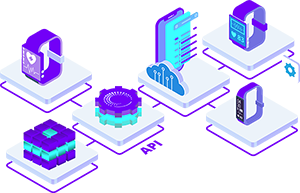
ROOK offers a single API that connects applications with standardized health data from hundreds of wearables. Instead of building one integration at a time, developers use ROOK to access normalized metrics from multiple device ecosystems.
Key advantages
One integration replaces many
Normalized data models across sleep, activity, and cardiovascular metrics
Reduced development and maintenance overhead
Supports a wide range of devices, including Apple, Google, Fitbit, Garmin, and Oura
Considerations
Works best for products that need multi-device coverage
Requires backend integration
How to choose the right wearable API
The best option depends on your product needs:
If you develop for a single ecosystem, native APIs such as HealthKit or Google Fit may be enough.
If you need sports and performance data, Garmin provides deeper insights.
If your focus is sleep and recovery, Oura offers strong metrics.
If you want broad device coverage through one integration, ROOK can reduce technical complexity and streamline data processing.
Conclusion
Developers have many options when it comes to integrating wearable data, but each comes with its own trade-offs. Understanding the strengths and limitations of each API helps teams create reliable, inclusive experiences for their users. By choosing the right integration strategy, developers can access meaningful health data and focus on delivering value rather than managing data pipelines.
👉 ROOK is designed to help businesses move from wearable data to real health outcomes, providing a scalable, reliable, and easy solution to integrate multiple devices with normalized data.
If you’re interested in learning more about how ROOK can help your team build more efficient digital health products, schedule a call with us here