
The Real Challenges of Wearable Data: From Access to Trust
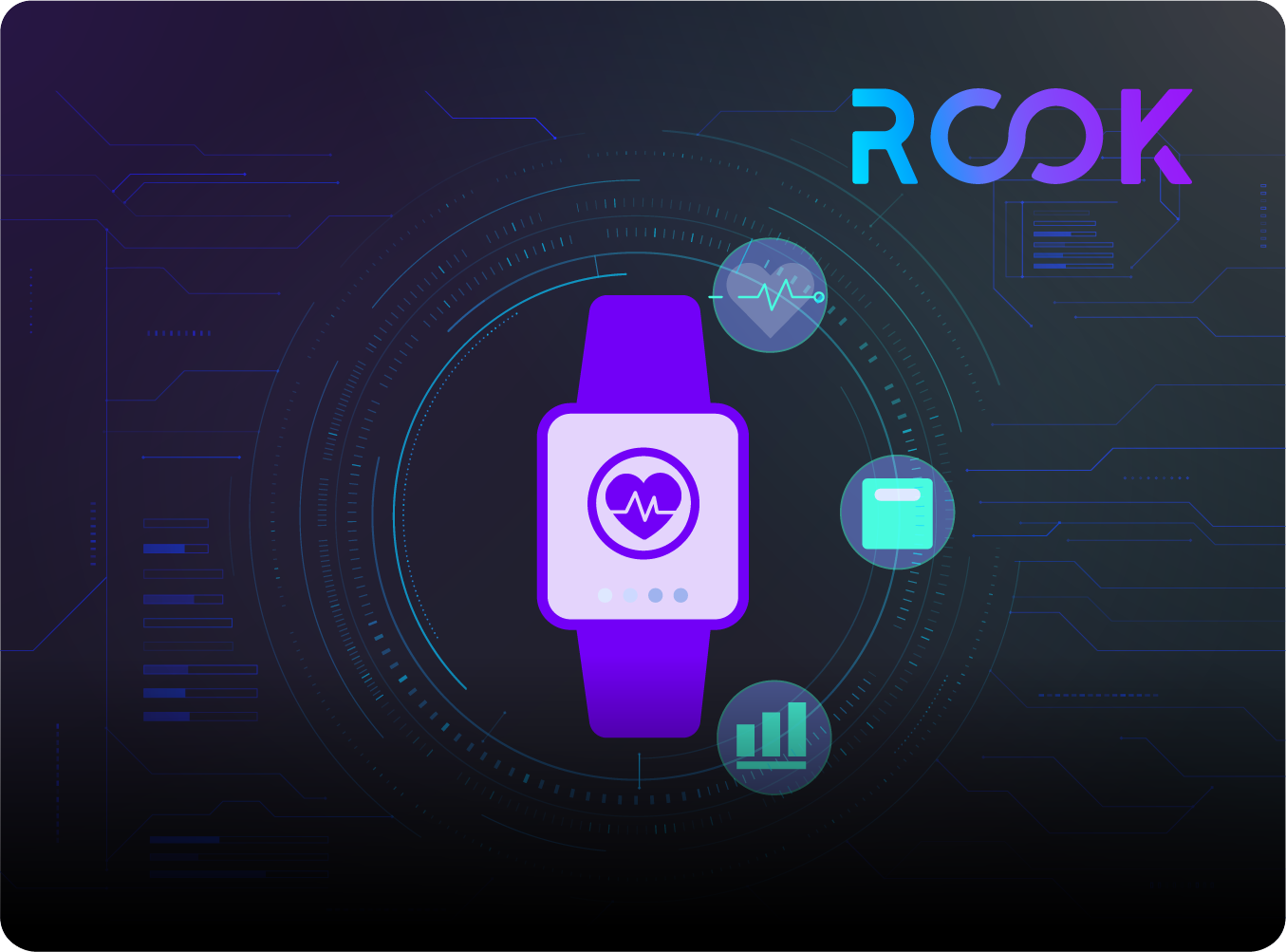
Wearables have become part of everyday life: smartwatches, rings, bands, and sensors that promise a continuous view of the human body. For digital health, wellness, insurance, or fitness products, this sounds ideal—24/7 data on activity, sleep, heart rate, stress, temperature, glucose, and more.
In practice, however, working with wearable data is far more complex than simply “connecting an API.” Most teams quickly discover that the real challenge is not accessing data, but making that data reliable, comparable, and truly useful for decision-making.
There is no single “wearable data”—only a fragmented ecosystem
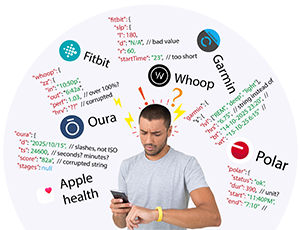
One of the first challenges teams encounter is fragmentation. Each brand and device operates with its own sensors, algorithms, and data models. Even when two wearables report the same metric—such as sleep or heart rate—they may measure it differently, at different sampling rates, and with definitions that are not always equivalent.
This creates an uncomfortable reality: wearable data is rarely comparable across providers, and what appears to be “standardized” often is not. As a result, building a consistent experience for users who connect multiple devices requires constant adjustments and validation.
Data quality changes completely in the real world
Another critical issue is that wearables depend on human behavior. People remove their devices, forget to charge them, switch phones, lose connectivity, travel across time zones, or simply stop syncing. This leads to incomplete or intermittent data, and those gaps are not always obvious at first glance.
In some cases, data does arrive—but late, duplicated, or out of order. Without strong controls, this can inflate metrics, distort trends, and undermine trust in reports. In health-related use cases, where reliability is essential, these issues become especially problematic.

Raw data does not equal insight
A common misconception is that more data automatically means more value. In reality, data without context explains very little. A single heart rate value, sleep duration, or step count is rarely meaningful on its own. Context—historical trends, user profiles, behavior patterns, and timing—is what turns signals into insights.
This is why many products struggle when moving from “displaying metrics” to “delivering recommendations” or “predicting risk.” Advanced analytics and AI depend on consistency and continuity; without them, insights quickly become fragile.

Scaling wearable data also scales complexity
At the MVP or prototype stage, these problems are often invisible. But as user numbers grow, so do data volumes, edge cases, processing costs, and integration maintenance. What works for hundreds of users can become unstable for thousands or millions.
As products mature, non-negotiable requirements emerge: monitoring, traceability, error detection, deduplication, consistent units and formats, and data governance. These are often hidden costs that teams underestimate early on.
Privacy and governance: the quiet challenge
Finally, wearable data is sensitive by nature. Even in fitness or wellness applications, teams are handling personal information that requires strong security practices, access controls, retention policies, and transparency. For companies entering digital health or regulated environments, this layer becomes even more critical.

Conclusion
Wearables unlock enormous opportunities, but they also introduce real challenges: fragmentation, inconsistency, missing data, lack of true standardization, and difficulty turning signals into reliable insights. The difference between a product that simply “connects wearables” and one that creates real value lies in how these challenges are addressed from the start.
In the end, the most important question isn’t:
“Can I access wearable data?”
It’s:
“Can I trust it to make decisions, scale confidently, and drive real outcomes?”