
Wearable SDK for healthcare app development
How to build faster with real data
Healthcare applications are evolving. More and more products are moving away from relying solely on forms, manual inputs, or occasional visits, and are instead leveraging continuous data to deliver more personalized experiences. In this shift, wearable devices play a central role, enabling the capture of real-time data such as activity, sleep, heart rate, recovery, and other health indicators.
However, integrating this data into a healthcare application is not as simple as connecting a watch or sensor. Behind that integration are multiple technical challenges: each device has its own API, its own data model, its own permissions, and its own authentication flows. On top of that, data does not always arrive in the same structure or with the same level of quality. For many companies, the real challenge is not accessing data, but turning it into something stable, consistent, and useful for building products.
This is where a wearable SDK becomes essential.
What is a wearable SDK
A wearable SDK is a set of tools that helps developers integrate, manage, and synchronize data from health devices within an application. Instead of building each integration from scratch, teams can rely on an SDK to accelerate development and reduce complexity.
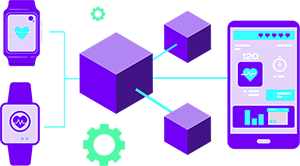
In practice, this means the SDK simplifies tasks such as connecting to multiple data sources, handling user authentication, managing permissions, synchronizing data, and processing updates or events. In healthcare applications, this is especially valuable because it’s not just about connecting—it’s about doing so in a secure, reliable, and scalable way.
Why healthcare apps need a wearable SDK
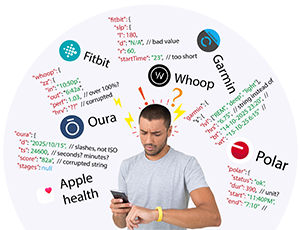
The main challenge of integrating wearables without a supporting layer is fragmentation. Each ecosystem works differently. Apple Health does not organize data the same way as Garmin. Health Connect operates differently from Oura or Fitbit. Even when multiple devices measure similar metrics, like sleep or heart rate, the way they structure and report that data can vary significantly.
This forces development teams to spend time not only integrating sources, but also understanding how each one behaves, maintaining those integrations over time, and making all that data meaningful within the product. For companies looking to launch or scale a healthcare application, this can significantly slow down development.
An SDK helps solve this problem by reducing repetitive work. Instead of building and maintaining all integration logic internally, teams can focus on user experience and product logic. This also directly impacts time to market—what might take months can be significantly reduced with the right infrastructure.
What a good wearable SDK for healthcare should provide
Not all SDKs are equally useful in healthcare. For these applications, simply connecting to a device is not enough. The solution must account for the complexity of the ecosystem.
One of the most important features is support for multiple data sources. A healthcare app cannot depend on a single device if it aims to reach a broader user base. It needs to work with Apple Health, Health Connect, Samsung Health, Garmin, Fitbit, Oura, Whoop, and other relevant platforms. The broader the coverage, the more flexible the product becomes.
Another critical aspect is data standardization. In healthcare, receiving data is not enough if each source provides it in different formats and with non-comparable metrics. A good SDK should help transform that data into consistent structures, allowing teams to build reliable and comparable experiences without recreating logic for each provider.
Access to historical data is also important. Many applications need to analyze trends, build baselines, or deliver value from day one. Features like pre-existing data retrieval allow apps to leverage past data immediately, improving onboarding and enabling faster insights.
Developer experience is another key factor. An SDK with clear documentation, consistent structure, and clean implementation reduces errors, improves adoption within teams, and simplifies long-term maintenance. For startups and small teams, this can make a significant difference.
Use cases in healthcare applications
The value of a wearable SDK becomes especially clear in products where continuous data matters. A strong example is remote patient monitoring. Being able to receive frequent updates on activity, sleep, recovery, and other biomarkers enables better tracking beyond clinical visits and faster detection of changes.
It is also valuable in preventive health applications. By analyzing trends over time, apps can identify early risk signals and recommend behavioral changes before issues escalate.
In chronic condition management, continuous data enables more personalized experiences, better tracking of patient progress, and more adaptive recommendations. The same applies to wellness platforms and digital therapeutics, where wearable data can be used to tailor programs, recommendations, and interventions.
The challenge is not just integration, but value creation
A common misconception is that the work is done once the integration is complete. In reality, that is only the beginning. The real value comes from turning data into clear, actionable insights that support decision-making.
That’s why a good SDK should go beyond connectivity. It should ensure that data is clean, structured, and ready to be used by product, engineering, and data teams. This includes not just collection, but also how data is organized, updated, and made usable.
Key considerations
Even with an SDK, several factors remain important. One is data quality, as not all devices measure with the same accuracy. Another is user permissions, since data availability depends on what users allow and what devices can provide.
Regulation is also critical. Healthcare applications operate in environments where privacy and compliance are essential. Any wearable integration must carefully handle authentication, permissions, and data security.
Finally, scalability matters. An integration that works for a small user base may not hold up as the product grows. It is important to choose a solution that supports long-term scalability from the start.
The role of unified platforms
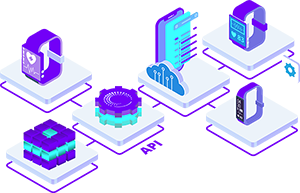
In many cases, the most effective SDKs are part of broader platforms that also provide unified APIs, data normalization, and infrastructure layers. This is especially valuable for teams that prefer not to build and maintain complex interoperability systems internally.
Instead of investing resources in infrastructure, teams can focus on what differentiates their product: user experience, clinical logic, engagement, and insights.
Final thoughts
Wearable SDKs are becoming a foundational component of modern healthcare applications. They not only accelerate integration but also reduce complexity, improve reliability, and enable products to operate effectively with continuous data.
As digital health continues to evolve toward more personalized, preventive, and data-driven models, the ability to integrate and use wearable data will become increasingly important. In this context, choosing the right SDK is not just a technical decision—it is a strategic one that impacts speed, scalability, and product quality.