
What ACCESS Model Companies Need to Build Before Go-Live
Launching an ACCESS model can open the door to more continuous, personalized, and data-driven healthcare experiences. But before going live, companies need more than a strong product vision.
They need the right infrastructure, workflows, data strategy, and operational readiness.
Many teams underestimate how much needs to be built before launch. The biggest challenges often appear late in the process: data inconsistencies, unclear reporting requirements, device fragmentation, consent flows, patient onboarding, and integration timelines.
The companies that prepare early are the ones best positioned to scale successfully.
Why Go-Live Planning Matters
The ACCESS model depends on the ability to understand what is happening with patients beyond traditional clinical settings.
That means companies need to collect, process, analyze, and report health data from multiple sources, including wearables, connected devices, patient inputs, and clinical systems.
At small scale, teams may be able to manage some of this manually. But once the program grows, every gap becomes more expensive to fix.
Before go-live, teams should be clear on three things:
What data they need.
How that data will be collected and standardized.
How it will be used for reporting, monitoring, and decision-making.
Without this foundation, the launch can quickly become operationally complex.
1. Define the Data Requirements Early
One of the first things ACCESS model companies need to build is a clear data requirements framework.
This should answer questions like:
What health metrics are required?
Which devices or platforms will patients use?
How frequently does data need to be collected?
Which metrics are mandatory vs. optional?
What data is needed for reporting?
What data is needed for patient monitoring?
What data is needed for clinical or operational decisions?
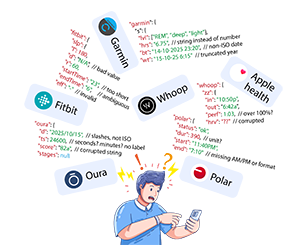
This step is critical because different devices produce different types of data. For example, one wearable may provide detailed sleep stages, while another only provides sleep duration. One platform may offer HRV, while another may calculate recovery differently.
If teams do not define their data needs early, they may discover too late that the available data does not support their reporting or care workflows.

2. Build a Standardized Data Layer
Data standardization is one of the most important pieces to solve before go-live.
Patients will not all use the same devices. Some may use Apple Health, Fitbit, Garmin, Oura, Samsung Health, Health Connect, Dexcom, or other connected health tools.
Each source has its own format, metric definitions, timestamps, units, and data quality patterns.
Without standardization, teams may struggle to compare data across patients or generate consistent reports.
A standardized data layer should help teams:
Normalize metrics across devices.
Align timestamps and units.
Handle missing or incomplete data.
Reduce duplicate records.
Create consistent outputs for dashboards and reports.
Support reliable analysis across patient populations.
This is where many companies get stuck. They focus on collecting data, but not enough on making the data usable.
3. Prepare Patient Onboarding and Consent Flows
Even the best data infrastructure will fail if patients cannot easily connect their devices or understand what they are agreeing to share.
Before go-live, teams should build clear onboarding flows that explain:
Which devices are supported.
How patients connect their accounts or devices.
What data will be collected.
Why the data is being collected.
How the data will be used.
How patients can manage access or permissions.
Consent management should also be part of the launch plan. ACCESS model companies need to ensure that data access is permission-based, transparent, and aligned with privacy expectations.
A confusing onboarding flow can reduce activation rates and limit the amount of usable data available after launch.
4. Align Reporting Before Launch
Reporting is often one of the areas where teams underestimate complexity.
Before go-live, companies should define the reports they need to generate and the stakeholders who will use them.
This may include:
Patient engagement reports.
Program performance dashboards.
Outcome measurement reports.
Adherence tracking.
Clinical review summaries.
Operational reports.
Partner or payer-facing reports.
The key is to define reporting requirements before the data starts flowing.
If teams wait until after launch, they may realize that the data is incomplete, inconsistent, or not structured in a way that supports the reports they promised.

5. Build Monitoring and Alerting Logic
For many ACCESS model companies, the goal is not just to collect data. The goal is to act on it.
That requires monitoring and alerting logic.
Before go-live, teams should decide:
Which metrics should be monitored?
What counts as an abnormal trend?
What thresholds should trigger an alert?
Who receives the alert?
What action should happen next?
When should a case be escalated?
How should alerts be documented?
Without this logic, teams may collect large amounts of health data without a clear process for turning it into action.
This can create noise for care teams and reduce the value of the program.
6. Plan for Device Fragmentation
Device fragmentation is one of the biggest obstacles for ACCESS model companies.
In real-world programs, patients use different devices, switch devices over time, forget to wear them, or disconnect accounts.
Teams need to plan for these scenarios before go-live.
Common questions include:
What happens if a patient changes wearables?
What happens if a device stops syncing?
How will missing data be handled?
How will the system identify stale data?
How will support teams troubleshoot connection issues?
How will patients be notified if data is not syncing?
These details may seem small, but they can become major operational blockers once the program is live.
7. Set Realistic Timelines
The timeline for launching an ACCESS model depends on the complexity of the program, the number of data sources, the reporting requirements, and the level of clinical involvement.
A realistic timeline should include time for:
Data requirements definition.
Device and source selection.
API or SDK integration.
Consent and onboarding flows.
Data normalization and testing.
Dashboard and reporting setup.
Security and compliance review.
QA testing across devices.
Pilot launch.
Feedback and iteration.
Where teams often get stuck is assuming that device integration is the main task.
In reality, integration is only one part of the process. The harder work is making sure the data is reliable, standardized, usable, and connected to operational workflows.
Where Teams Typically Get Stuck
Most ACCESS model teams do not get stuck because they lack ambition. They get stuck because the operational details are more complex than expected.
The most common blockers include:
Unclear data requirements
Teams collect data before defining what they actually need.Inconsistent wearable data
Different devices produce different formats, units, and levels of detail.Manual data cleaning
Teams rely on spreadsheets or custom scripts to prepare data for reports.Delayed reporting design
Reports are defined after launch instead of before.Weak onboarding flows
Patients struggle to connect devices or understand permissions.No alerting logic
Data is collected, but there is no clear process for acting on abnormal trends.Underestimated compliance work
Security, privacy, and consent requirements take longer than expected.
How ROOK Can Help
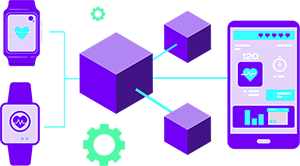
For ACCESS model companies, ROOK can act as a health data infrastructure layer that simplifies one of the hardest parts of go-live: working with data from multiple devices and sources.
Instead of building separate integrations for every wearable or health platform, teams can use ROOK to access standardized, normalized, and ready-to-use health data through a single API.
This can help companies:
Reduce integration complexity.
Support multiple devices and ecosystems.
Improve data consistency.
Build more reliable reporting.
Prepare data for monitoring and alerts.
Scale without adding unnecessary engineering overhead.
ROOK does not replace the need for clear strategy, workflows, or clinical requirements. But it can help make the data layer more stable, scalable, and easier to build on.
Final Thoughts
Going live with an ACCESS model requires more than launching a product.
It requires a strong foundation for data, reporting, onboarding, monitoring, consent, and operational workflows.
The companies that succeed will be the ones that prepare before launch, define their requirements clearly, and build infrastructure that can scale as patient volume grows.
The biggest risk is not a lack of data.
The biggest risk is collecting data that is fragmented, inconsistent, or difficult to use.
Before go-live, ACCESS model companies should focus on building the systems that make health data clean, reliable, and actionable. That foundation is what allows patient monitoring, outcome measurement, and personalized care to scale with confidence.