
What AI agents will need from health data
AI agents are evolving rapidly. They are no longer limited to answering questions or executing simple tasks, but are beginning to observe, reason, and make decisions on an ongoing basis. In the context of digital health, this shift raises a key question: what kind of data will AI agents need to be truly useful, reliable, and responsible?
Health data, and especially data coming from wearables, will play a central role. But not just any data will be enough.
From reactive models to continuous AI agents
Unlike traditional models, AI agents operate persistently. They analyze information over time, detect changes, and adjust their behavior based on context.
For this to work in health, agents need data that reflects continuous processes, not isolated events. Health does not happen at specific moments, but as an ongoing evolution of the body and behavior.
Continuous and longitudinal data as a foundation
AI agents will need access to longitudinal data that allows them to build an individual health history. This includes physiological metrics, activity, sleep, and recovery captured over time.
These data streams make it possible to establish personal baselines and detect meaningful deviations. Without continuity, agents can only react, not anticipate.
Standardized and comparable data
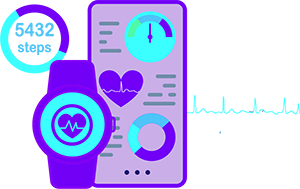
To reason correctly, AI agents need consistent data. Fragmentation across devices, platforms, and formats introduces ambiguity and errors.
Standardization of health data will be a fundamental requirement. This is not just about unifying formats, but about aligning definitions, units, and meaning so agents can interpret information independently of its source.
Context: data without explanation is not enough
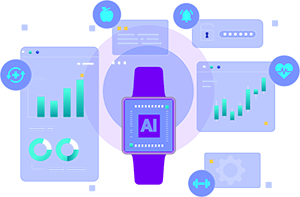
An isolated physiological value has little meaning without context. AI agents will need additional information to understand why a data point changes.
This includes behavioral context (activity, routines, rest), temporal context (time of day, cycles, trends), and, when possible, environmental or self-reported context. Context is what turns data into actionable knowledge.

Quality, reliability, and traceability
AI agents must know how reliable a data point is. This requires quality indicators, clear data sources, and full traceability.
Without this information, agents cannot calibrate confidence or decide when to act, when to wait, or when to escalate to a human.
Data ready for reasoning, not just analysis
AI agents do not only analyze data; they use it to reason and make decisions. For this reason, they need data that is already processed, normalized, and enriched—not raw streams that are hard to interpret.
This includes features, baselines, trends, and derived signals that allow agents to infer states and changes without rebuilding everything from scratch.
Privacy, consent, and user control
As agents gain more autonomy, responsibility increases. Health data used by AI agents must be backed by explicit, granular, and dynamic consent.
Users must retain control over what data is used, for what purpose, and for how long. Trust becomes a technical and ethical prerequisite.

Integration with humans and clinical systems
AI agents will not operate in isolation. They must integrate with healthcare professionals, clinical systems, and existing decision workflows.
This requires data that is interpretable, explainable, and actionable—not just technically accurate.

Conclusion
AI agents in health will require much more than large volumes of data. They will need data that is continuous, standardized, contextualized, and reliable, designed to support reasoning and responsible decision-making.
Companies that invest today in building this data foundation will be better positioned to leverage the next generation of AI agents in health in a scalable, ethical, and sustainable way.