
The future of wearable data in 2026 and beyond
Wearable devices are no longer simple activity trackers. By 2026, the data they generate is becoming critical infrastructure for health, fitness, insurance, and digital wellness products. What once were isolated metrics are now continuous signals that power decisions, AI models, and personalized experiences.
The future of wearable data is not driven only by new devices, but by how this data is standardized, interpreted, and used at scale.
From isolated metrics to continuous health signals
For years, wearables focused on step counts or heart rate tracking. In 2026, the focus has shifted to continuous time-series data that reveals patterns, trends, and subtle changes in an individual’s health.
This shift enables a move from reactive health to predictive and preventive health, where signals from the body are analyzed in context and over time.
Standardization as a growth pillar
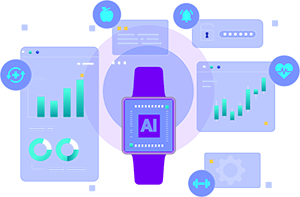
As wearable adoption increases, so does fragmentation. Different devices, operating systems, and manufacturers produce data with varying definitions, formats, and sampling rates.
In the coming years, data standardization will be one of the main differentiators between products that scale and those that do not. Companies that work with unified data models will be able to build analytics, AI, and cross-platform experiences faster and more reliably.
AI-ready wearable data
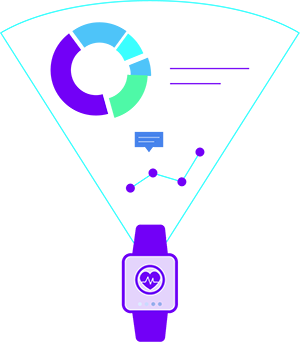
AI will be one of the biggest drivers of value for wearable data. However, AI models do not work with raw signals. They require data that is normalized, contextualized, and validated.
In 2026 and beyond, we will see increased focus on:
Personal baselines rather than population averages
Models that understand relative change instead of absolute values
Integration of behavioral and environmental context
Wearable data will move from being inputs to becoming layers of intelligence.

From fitness to holistic health and longevity
The use of wearable data is expanding well beyond fitness. Longevity clinics, preventive health programs, insurance, and InsurTech companies already rely on these signals to assess risk, encourage healthy behaviors, and personalize interventions.
In the near future, wearables will be a core component of continuous health management, not just training or general wellness.

Privacy, consent, and trust as competitive advantages
As wearable data becomes more sensitive and valuable, user trust becomes a key asset. The future of this ecosystem will be shaped by products that prioritize privacy, control, and transparency.
Dynamic consent, data traceability, and responsible AI usage will not only be regulatory requirements, but also sources of competitive differentiation.

APIs and platforms as core infrastructure
The technical complexity of integrating multiple wearables will continue to grow. As a result, APIs and data aggregation platforms will play an increasingly important role.
Rather than building point-to-point integrations, companies will adopt infrastructure layers that abstract complexity and allow teams to focus on product, experience, and impact.

What comes after 2026
Looking ahead, the value of wearable data will depend less on the device itself and more on:
Data quality and continuity
The ability to generate actionable insights
Integration with AI and decision systems
The trust companies build with their users
Wearables will evolve from sensors into persistent interfaces between the human body and digital systems.
Conclusion
The future of wearable data in 2026 and beyond is defined by standardization, intelligence, and trust. Companies that treat wearable data as strategic infrastructure, rather than isolated metrics, will be better positioned to build scalable, responsible, and truly transformative digital health products.