
How do I integrate data from multiple wearables into one system?
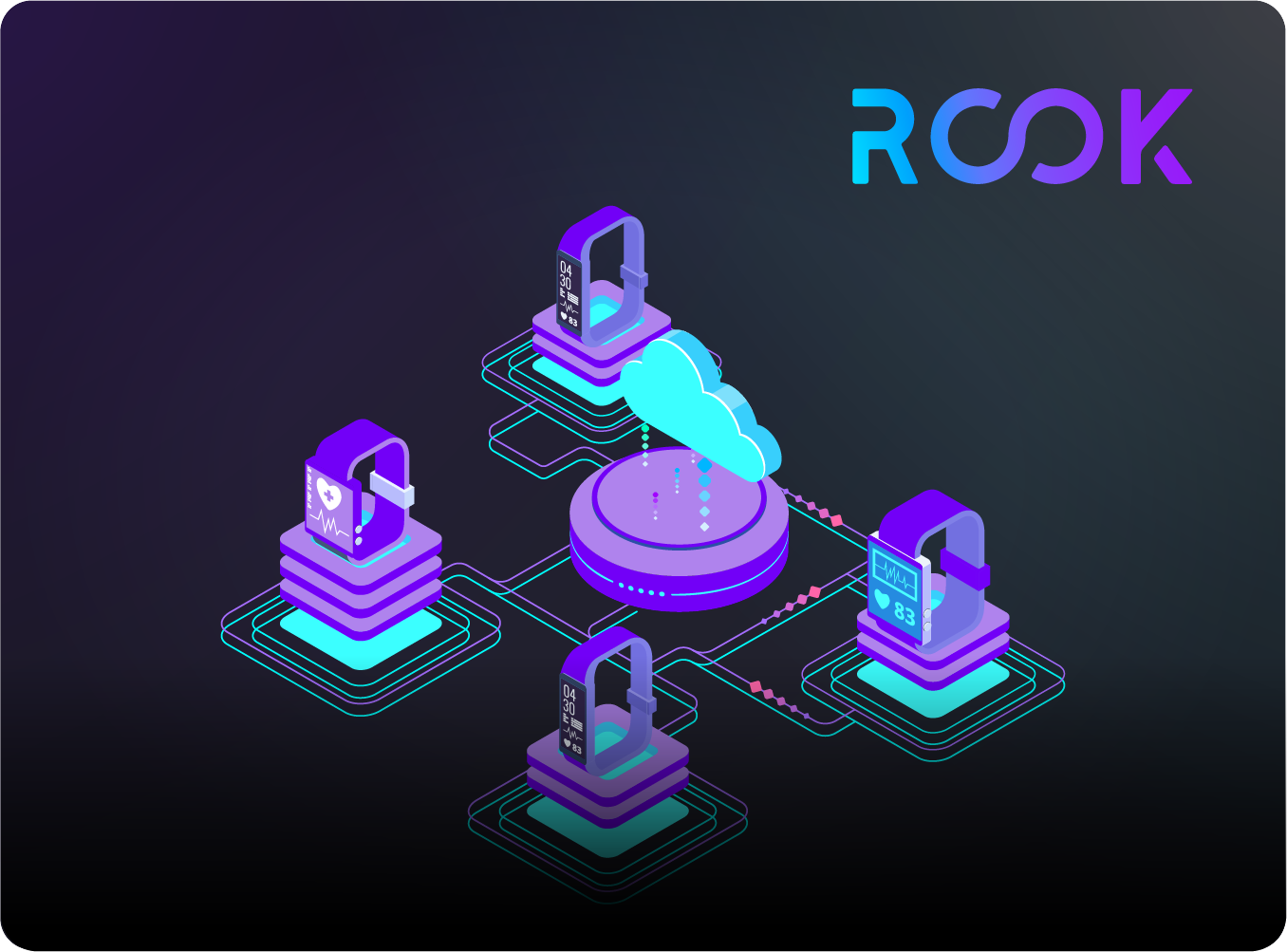
As wearable adoption grows across health, wellness, insurance, research, and performance applications, organizations face a major technical challenge: consolidating data from many different devices into a single, reliable system.
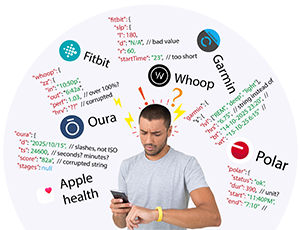
Each wearable brand collects, structures, and transmits data in its own way. This creates fragmentation that slows down development, complicates analytics, and increases operational costs. To build scalable products, teams need an approach that unifies wearable data and reduces complexity.
This article explains the key challenges and the three main approaches to integrating data from multiple wearables into one system.
The challenge: every wearable speaks a different language
Most wearable ecosystems operate independently, following their own:
Data formats
Sampling intervals
Metric definitions
API protocols
Permission models
For example:
A heart rate metric may have different names and sampling rates across devices.
Sleep data may be structured in unique formats for each platform.
Some APIs require batch updates, while others use real-time streams.
This fragmentation leads to manual work, inconsistent results, and difficulty scaling to large populations or diverse device sets.
Approach 1: Build direct integrations with each wearable provider
Some teams start by building their own integrations with device manufacturers. This approach gives them full control but requires ongoing engineering and maintenance.
Pros
Full customization
Direct access to device-specific features
Cons
Dozens of integrations to build and maintain
Constant API updates
Complex normalization work
High long-term cost
This approach becomes difficult as the list of supported devices grows.
Approach 2: Use middleware tools to sync raw data
Some platforms collect wearable data on behalf of developers but provide it mainly in raw form. This reduces the number of integrations but still requires teams to normalize, clean, and interpret the data.
Pros
Simplifies device connectivity
Faster setup than direct integrations
Cons
Raw data may vary widely
Requires internal data modeling
Insights must be built from scratch
This approach works for teams with strong data-processing resources.
Approach 3: Use a unified wearable data platform
Unified platforms such as ROOK provide normalized, insight-ready data across hundreds of devices through one integration. Instead of managing device differences, teams work with a consistent model.
Pros
One integration for all devices
Normalized data across activity, sleep, and cardiovascular metrics
Ready for analytics and AI workloads
Reduced engineering and maintenance
Faster time from data ingestion to insight generation
Cons
Requires adopting a standardized data model
This approach supports large-scale deployments and simplifies development across many use cases.
What your system needs to integrate wearable data effectively
Regardless of the approach, successful integration requires:
1. A unified data model
A consistent structure for sleep, activity, heart rate, and other metrics prevents fragmentation.
2. Clear permissions and user flow
Users need a simple, transparent way to connect their devices.
3. Scalable ingestion infrastructure
Wearable data can generate millions of data points per day.
4. Normalization logic
Mapping heterogeneous device data into a unified format is essential for accuracy.
5. Insights and analytics
Turning raw data into meaningful information enables personalization and decision-making.
Unified platforms handle most of this automatically, reducing the technical burden on teams.

How ROOK simplifies multi-device integration
ROOK eliminates the need to build one integration at a time. With a single API, teams can access normalized, insight-ready data from hundreds of wearables.
ROOK provides:
A unified data model
Normalized metrics across all devices
Clear and simple user authorization
Scalable infrastructure
Insight-ready outputs for health, wellness, insurance, and research
This allows developers to focus on their product, not on data engineering.

Conclusion
Integrating data from multiple wearables into one system is challenging due to the fragmentation of device ecosystems. Teams can choose between building their own integrations, using raw-data middleware, or adopting a unified wearable data platform.
The most scalable and efficient approach is to use a unified platform that normalizes and standardizes wearable data, making it ready for analysis, personalization, and AI-driven insights.
With ROOK, organizations gain a clear, consistent, and reliable way to work with wearable data at scale.