
How to standardize health data from devices
Wearable devices generate massive volumes of health data every day. From heart rate and activity to sleep and recovery metrics, devices like Fitbit, Apple Watch, and Garmin provide valuable insights that power modern health, fitness, and wellness applications.
The challenge is not access to data. The challenge is standardization.
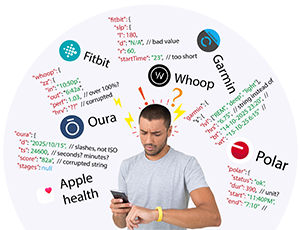
Each device uses its own data models, naming conventions, sampling frequencies, and calculation logic. Without standardization, teams face fragmented datasets, inconsistent metrics, and complex downstream analytics.
Why wearable data standardization matters
Without a standardized data layer, teams typically encounter:
Multiple schemas for the same metric (for example, heart rate or sleep)
Inconsistent units and timestamps
Different definitions for the same concept (steps, calories, sleep stages)
Increased engineering overhead and maintenance costs
Limited ability to scale analytics and AI models
Standardization turns raw device data into reliable, comparable, and usable information.
Key differences between Fitbit, Apple Watch, and Garmin data
Each ecosystem was built with different priorities.
Fitbit
Strong focus on daily activity and sleep
Cloud-based data access
Device-calculated metrics
Simplified data structures
Apple Watch (HealthKit)
Highly granular and privacy-driven
On-device data access only
Broad range of health signals
User-controlled permissions per data type
Garmin
Performance and training oriented
Advanced fitness and physiological metrics
Batch-style data delivery
Device-specific calculations
These differences make direct comparison difficult without a normalization layer.
Core steps to standardize wearable health data
1. Define a canonical data model
Start by defining a device-agnostic schema that represents:
Metric name
Unit of measurement
Timestamp and time zone
Data source
Sampling frequency
Confidence or completeness indicators
This model becomes your internal source of truth.
2. Normalize units and timestamps
Devices report data using different units and time references.
Best practices include:
Convert all metrics to standard units
Align timestamps to a single time zone (usually UTC)
Normalize sampling intervals
Handle overlapping or duplicate data points
3. Align metric definitions
The same metric can mean different things across devices.
Examples:
Calories (active vs total)
Sleep stages and scoring
Activity intensity thresholds
Standardization requires mapping device-specific definitions to a common interpretation.
4. Handle missing and inconsistent data
Wearable data is inherently imperfect.
You need logic to:
Detect gaps and partial data
Flag unreliable measurements
Merge overlapping sessions
Handle device switching by users
This step is critical for analytics and AI readiness.
5. Create a unified ingestion and processing pipeline
A scalable approach includes:
Device-specific ingestion adapters
A normalization layer
Validation and enrichment logic
A unified API or data access layer
This architecture separates device complexity from product logic.
Common pitfalls to avoid
Treating all devices as equal without understanding their differences
Hardcoding logic for each new wearable
Ignoring data quality and confidence
Mixing raw and normalized data in analytics
Underestimating long-term maintenance costs
Building vs buying a standardization layer
Teams usually face two options.
Build in-house
Pros:
Full control
Custom data models
Cons:
High engineering cost
Ongoing maintenance
Slow to support new devices
Use a unified wearable data platform
Pros:
Faster integration
Pre-normalized data
Scales with new devices and metrics
Cons:
Less customization at the raw level
For most teams, the decision comes down to speed, scale, and long-term cost.

Conclusion
Standardizing health data from devices like Fitbit, Apple Watch, and Garmin is essential for building reliable, scalable health products.
Without standardization, wearable data remains fragmented and difficult to use. With the right data model, normalization strategy, and processing pipeline, teams can turn raw device signals into consistent, high-quality inputs for analytics, personalization, and AI.
The teams that invest early in standardization are better positioned to scale faster and build more intelligent health experiences.