
How to use wearable data in AI health models
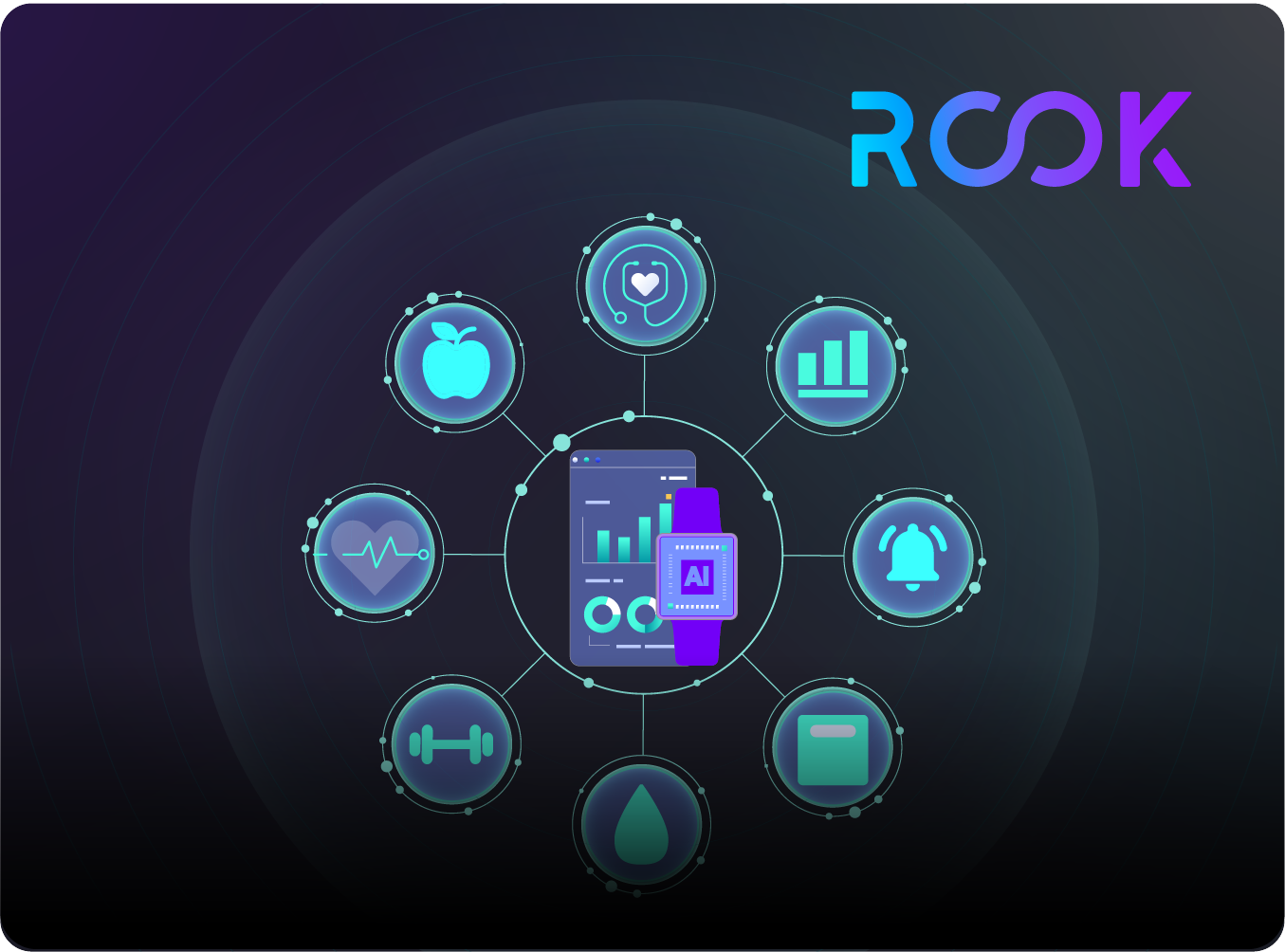
Wearable devices generate a continuous stream of health data, from heart rate and activity to sleep, recovery, and other physiological signals. As AI becomes central to health technology, wearable data is emerging as one of the most valuable inputs for building predictive, personalized, and adaptive models.
However, using wearable data in AI is not just about feeding models with raw signals. Success depends on the quality, structure, context, and interpretation of the data.
Why wearable data is so valuable for AI in health
Wearables offer a key advantage over traditional health data sources: they allow teams to see health as a movie, not a snapshot. Instead of relying on isolated measurements, wearables provide continuous information that reveals trends, patterns, and changes over time.
In addition, this data is collected in real-world conditions, as people go about their daily lives. This makes it possible to build models that better reflect user behavior and context, rather than controlled or artificial scenarios.
These characteristics enable use cases such as risk prediction, early detection of meaningful changes, personalized recommendations, adaptive coaching, stress and recovery modeling, and long-term health trend analysis.

Common challenges when using wearable data in AI
Working with wearable data introduces challenges that directly affect model reliability. Data is often fragmented across devices and platforms, with the same metric arriving in different formats. Sampling frequency varies by device and operating system, and gaps are common due to battery, permissions, or usage behavior.
Accuracy also differs between brands and models, which can introduce bias if not managed. Finally, wearable data often lacks the context needed to interpret it correctly. A change in sleep or heart rate may be caused by travel, illness, stress, or a shift in routine.
When these factors are ignored, models tend to be unstable, difficult to scale, and hard to trust.
Standardize and normalize the data
AI models require consistent inputs. The first step is to convert heterogeneous wearable data into a common structure. This includes normalizing units, aligning timestamps and time zones, and defining a device-agnostic data schema.
It is also important to handle duplicates and overlapping sessions. For example, a user may have multiple sources recording the same metric. If this is not addressed, the model may learn incorrect patterns.
Standardization is the foundation of any AI-ready wearable dataset.

Transform signals into meaningful features
Raw wearable signals are noisy and difficult for models to interpret. Successful teams transform raw data into features that better represent physiology and behavior.
In practice, this includes daily averages, trends, variability, rolling windows, personal baselines, and deviations from those baselines. In health, relative change over time is often more informative than absolute values.
The goal is to reduce noise and highlight stable patterns that can generalize across users and time.
Add context and, when possible, labels
Wearable data becomes far more valuable when enriched with context. Information such as age, goals, activity type, sleep timing, and routines helps models understand what the signals mean.
When labels are available—such as user-reported outcomes or relevant events—teams can train stronger supervised models and deliver more precise insights.
Without context, AI systems risk confusing correlation with meaningful signals and producing results that are hard to explain.

Choose the right modeling approach
Wearable data is inherently temporal, so modeling approaches that handle time series are often a good fit. In some cases, forecasting models help anticipate changes. In others, methods like gradient boosting perform well when applied to engineered features.
Temporal neural networks can also be effective but typically require larger datasets, stronger quality controls, and higher operational complexity. In many health applications, hybrid approaches that combine rules and machine learning offer a strong balance between performance and explainability.
Model choice should balance accuracy, interpretability, and operational feasibility.

Validate bias, drift, and reliability over time
In health AI, training a model is only the beginning. Data changes over time as users switch devices, modify habits, or experience life events. These changes introduce drift and can degrade performance.
Teams should continuously monitor performance across devices and user segments, detect changes in data quality or behavior, and recalibrate or retrain models as needed. Ongoing validation is critical for maintaining accuracy and trust.
Deploy responsibly
AI powered by wearable data should support decisions, not replace them blindly. Clear communication of limitations, conservative alert thresholds, and human-in-the-loop workflows help prevent misuse and overconfidence.
Privacy, consent, and user control must remain central at all times. Responsible deployment protects both users and products.

Common mistakes to avoid
A frequent mistake is training models on raw, unstandardized data. Another is assuming all wearables are equivalent, despite differences in accuracy and metric definitions. Teams also often ignore personal baselines, reducing personalization, or overfit short-term patterns that do not hold over time.
Finally, promising clinical outcomes without proper validation creates significant risk.
Conclusion
Wearable data has enormous potential to power AI health models, but only when handled with rigor. The most successful teams focus first on standardization, then on meaningful feature engineering, contextual enrichment, and continuous validation.
AI does not create value from raw data alone. Value emerges when wearable signals are transformed into reliable, interpretable, and actionable inputs that can scale across users, devices, and time.
Teams that build this foundation early are best positioned to deliver AI-driven health experiences that are truly useful and trustworthy.