Blog
How Does AI Use Continuous Health Monitoring to Flag Risks Early?
How AI reads continuous wearable data to learn a personal baseline, flag deviations, and prompt earlier conversations about health risks.
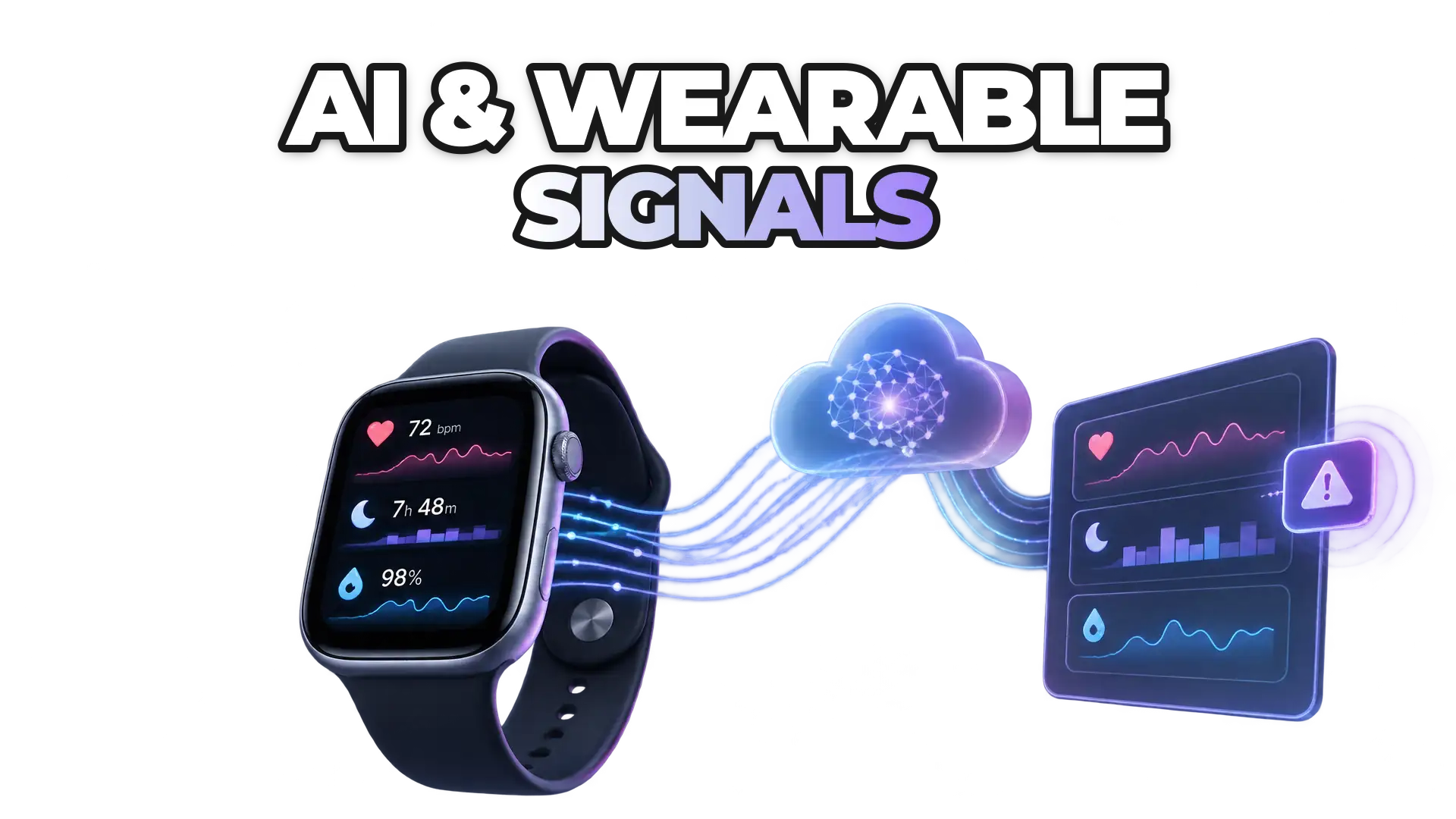
AI-powered continuous health monitoring combines wearables that collect heart rate, sleep, blood oxygen and activity around the clock with models that learn what is normal for each person. When a metric drifts from that baseline, such as an elevated heart rate or poorer sleep, the system flags it as a signal worth a closer look, which can prompt lifestyle changes or a visit to a healthcare provider before a problem escalates.
Healthcare is shifting from episodic care, where people react when symptoms appear, to continuous care, where early signals inform preventive measures and smarter decisions. Wearable technology and artificial intelligence are at the center of that shift.
What role does AI play in continuous health monitoring?
AI turns the raw stream of wearable data into patterns and signals. Smartwatches, fitness trackers and biosensors already record heart rate, sleep patterns, blood pressure and blood oxygen levels; AI analyzes and interprets those readings instead of only storing them. The process has three steps:
Continuous data collection. Wearable devices gather health data while a person walks, exercises, sleeps or rests, and sync it automatically to AI-driven platforms.
Pattern recognition. AI learns what is normal for each person over time, so it can spot deviations such as an elevated heart rate or poor sleep quality that may deserve attention.
Predictive analytics. By comparing historical data with known health patterns, AI models estimate future risk. For example, a sudden change in heart rate variability or a decline in physical activity may be a signal to review cardiovascular health, prompting a provider appointment or lifestyle adjustments.
How does AI-powered monitoring improve preventive care?
AI-powered monitoring improves preventive care by surfacing signals earlier and more often than periodic checkups can.
Earlier signals. Irregularities in heart rate or blood pressure readings can be reasons to check for conditions such as arrhythmias or hypertension, so preventive measures can start sooner.
Personalized recommendations. Based on a person's data, AI can suggest changes to diet, exercise routine or sleep habits. If a wearable records too little REM sleep, an app might suggest tips to improve sleep quality.
Chronic condition management. For people living with diabetes, asthma or heart disease, continuous readings of blood glucose, lung function and heart rate give care teams more context for timely intervention.
Engagement through data. People who can see their own health data and insights tend to engage more with wellness programs and make healthier lifestyle choices, with a better understanding of their personal health needs.
Which health risks can AI and wearables help flag?
AI and wearables can flag signals related to cardiovascular health, sleep, blood glucose and stress. A signal is a reason to seek medical advice, not a diagnosis:
Cardiovascular health. AI can analyze heart rate variability, blood pressure and other cardiovascular metrics, and a wearable can alert a person to irregular heart activity so they can seek medical advice.
Sleep. AI-powered wearables track sleep patterns and can surface irregularities that may warrant an evaluation for sleep apnea, insomnia or other sleep disorders.
Blood glucose. Continuous glucose monitors, combined with activity and dietary data, can show glucose patterns that support earlier lifestyle conversations about insulin resistance.
Stress and mental well-being. Some wearables track physiological indicators such as stress levels and heart rate variability, which AI can use to flag periods of elevated strain worth discussing with a professional.
Where is AI-driven continuous health monitoring heading?
AI-driven continuous health monitoring is heading toward more proactive care as continuous data collection, machine learning and predictive analytics mature. As wearables become more accurate and cover a broader range of health metrics, the signals AI produces become more precise and the resulting interventions more tailored. The aim is to help people take control of their health and to ease the burden on healthcare systems by focusing on prevention rather than treatment.
What does continuous monitoring with AI mean for health management?
Continuous monitoring with AI gives people and care teams earlier, personalized signals, which supports a more proactive approach to health management. With wearables and AI working together, individuals can make smarter health decisions and act sooner.
ROOK moves and standardizes the data; it does not diagnose or replace clinical judgment.
Next step: see how to use wearable data in AI health models, or explore how to track and improve HRV with wearables.
 Written byDaniel MasDigital Marketing Lead