Blog
What Smartwatch Health Data Doesn’t Tell You
Smartwatch health data shows numbers, not meaning. See what it leaves out (context, links between metrics, long-term trends, next steps) and how ROOK standardizes wearable data.
Smartwatch health data shows individual numbers such as steps, calories, heart rate, and a sleep score, but not what those numbers mean for a specific person. A smartwatch usually leaves out the personal context behind each metric, the relationships between metrics, the long-term trends behind a daily score, and clear guidance on what to do next. Wearable data is not a medical diagnosis or a replacement for professional medical advice.
Smartwatches have become one of the most popular tools for tracking health and daily activity.
Smartwatches count steps, measure heart rate, and track sleep.
Every day, smartwatches provide numbers that seem to explain how your body is doing. However, smartwatch health data does not always provide the context needed to understand what those numbers actually mean.
A smartwatch shows only part of the story.
Does a smartwatch provide a complete picture of your health?
No. A smartwatch does not provide a complete picture of your health. When you open a wearable app, you may see:
- Steps
- Calories
- Heart rate
- Sleep score
Those wearable health metrics can feel like a complete picture of your health, but they are often presented separately and without enough personal context to explain what is happening in your body.
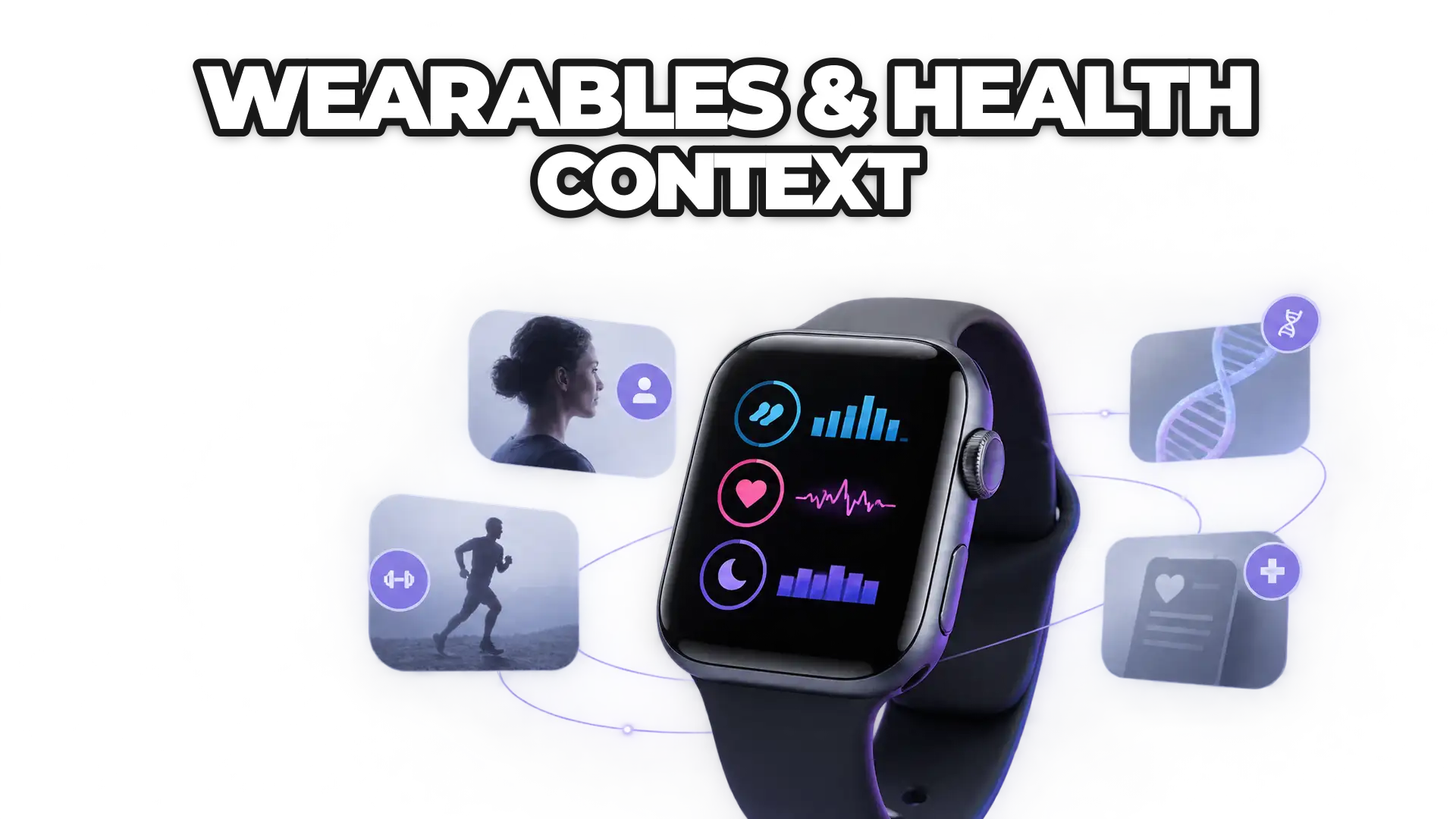
Smartwatches provide valuable health signals, but they do not offer a complete medical assessment. The meaning of each metric depends on factors such as your personal baseline, lifestyle, health history, recent activity, and goals. For an overview of activity, sleep, HRV, and temperature data, see the guide to wearable data types.
What is your smartwatch not telling you?
A smartwatch usually does not tell you four things: the context behind each health metric, the relationships between metrics, the long-term trends behind a daily score, and what you should do next.
Why does each health metric need personal context?
A health metric alone may mean very little without personal context.
For example:
- Are 7,000 daily steps good or bad?
- Is a resting heart rate of 60 bpm healthy or concerning?
- Are six hours of sleep enough?
- Does a lower recovery score mean you should rest?
The answer depends on factors such as:
- Your age
- Your lifestyle
- Your health history
- Your fitness level
- Your personal goals
- Your recent behavior
Without this context, wearable health metrics can be difficult to interpret and may even be misleading.
How do different health metrics affect each other?
Health metrics affect each other because your body does not work in isolated categories, even though most wearable devices display health data that way.
What your smartwatch may not clearly explain is:
- How poor sleep can affect physical performance
- How stress may influence recovery
- How activity can affect heart rate patterns
- How exercise intensity may influence sleep
- How several small changes can form a larger trend
The most meaningful insights are often found in the relationships between metrics, not in individual numbers.
Tools such as ROOKScore 2.0 can help companies use standardized health information to create a more structured view of areas such as physical activity, sleep, and body health.
Why do long-term trends matter more than a daily score?
Long-term trends matter because daily wearable data can be noisy. A single night of poor sleep or an unusually intense workout does not necessarily represent a meaningful health change.
What often matters more is:
- Patterns
- Consistency
- Personal baselines
- Repeated changes
- Trends over time
Your smartwatch might show today’s score, but it may not explain what that result means within the bigger picture of your health and behavior.
Does a smartwatch tell you what to do next?
Most wearable devices can tell you what happened, but very few clearly explain what you should do next.
Should you train today? Should you prioritize recovery? Is a change part of a larger pattern? Which other health signals should you consider?
Without context or guidance, wearable data has limited value. Transforming a measurement into an actionable insight requires historical information, relationships between metrics, and an understanding of the individual. ROOK’s view is set out in what makes wearable health data actionable.
Wearable information should also not be considered a medical diagnosis or a replacement for professional medical advice.
Why isn’t raw wearable data the same as health understanding?
Raw wearable data does not automatically create health understanding. Collecting data is relatively simple; turning that data into reliable, standardized, and meaningful information is much more difficult.
Smartwatches are not the problem. They are powerful tools for collecting real-world health data.
Before wearable health data can support a personalized product experience, it must be collected, organized, standardized, interpreted, and presented in a useful format.
Why is wearable data integration difficult at scale?
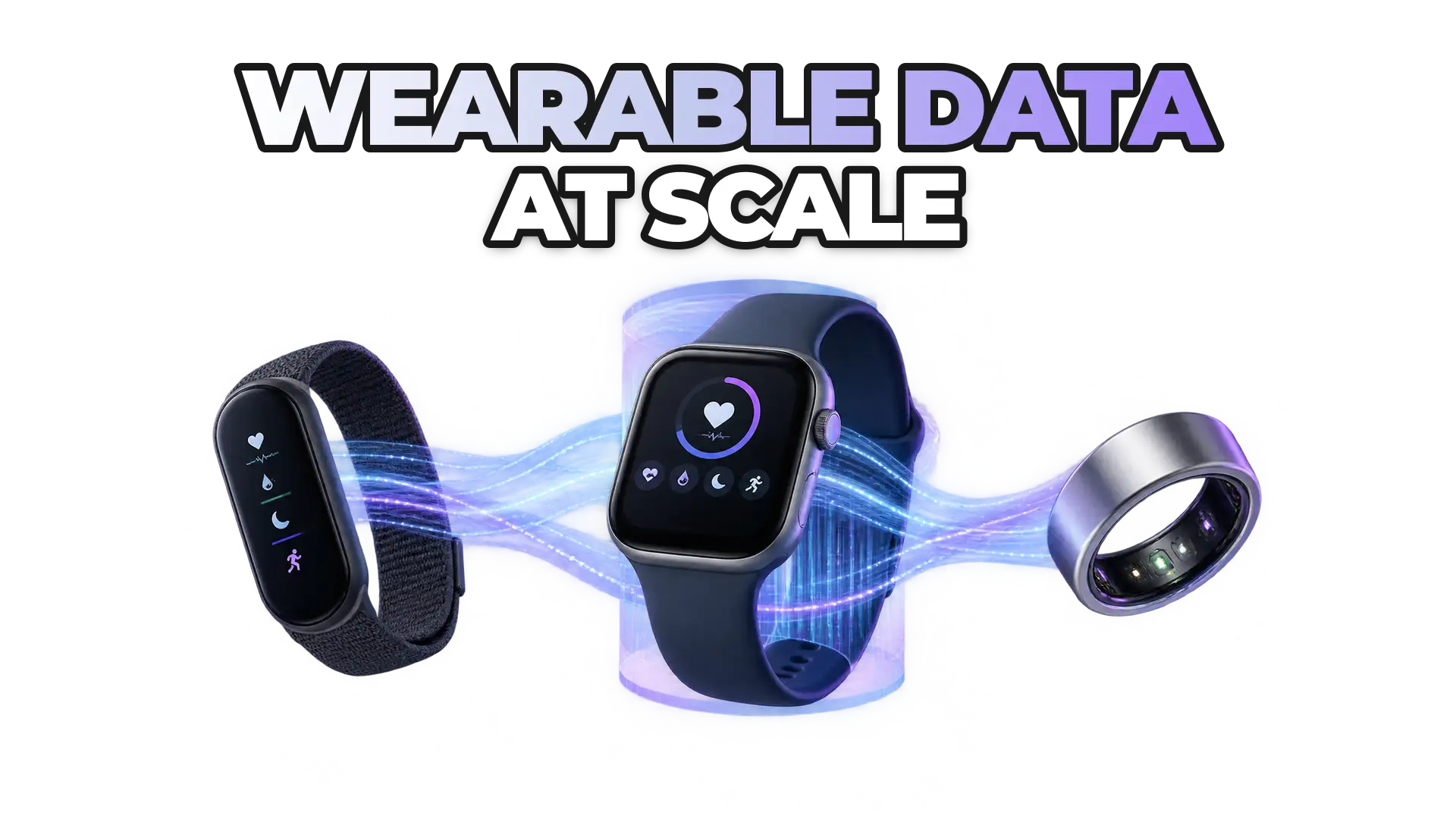
Wearable data integration is difficult at scale because companies building digital health products may receive data from multiple platforms and devices, including:
- Apple Health
- Garmin Connect
- Fitbit
- Oura
- Health Connect
Each provider may:
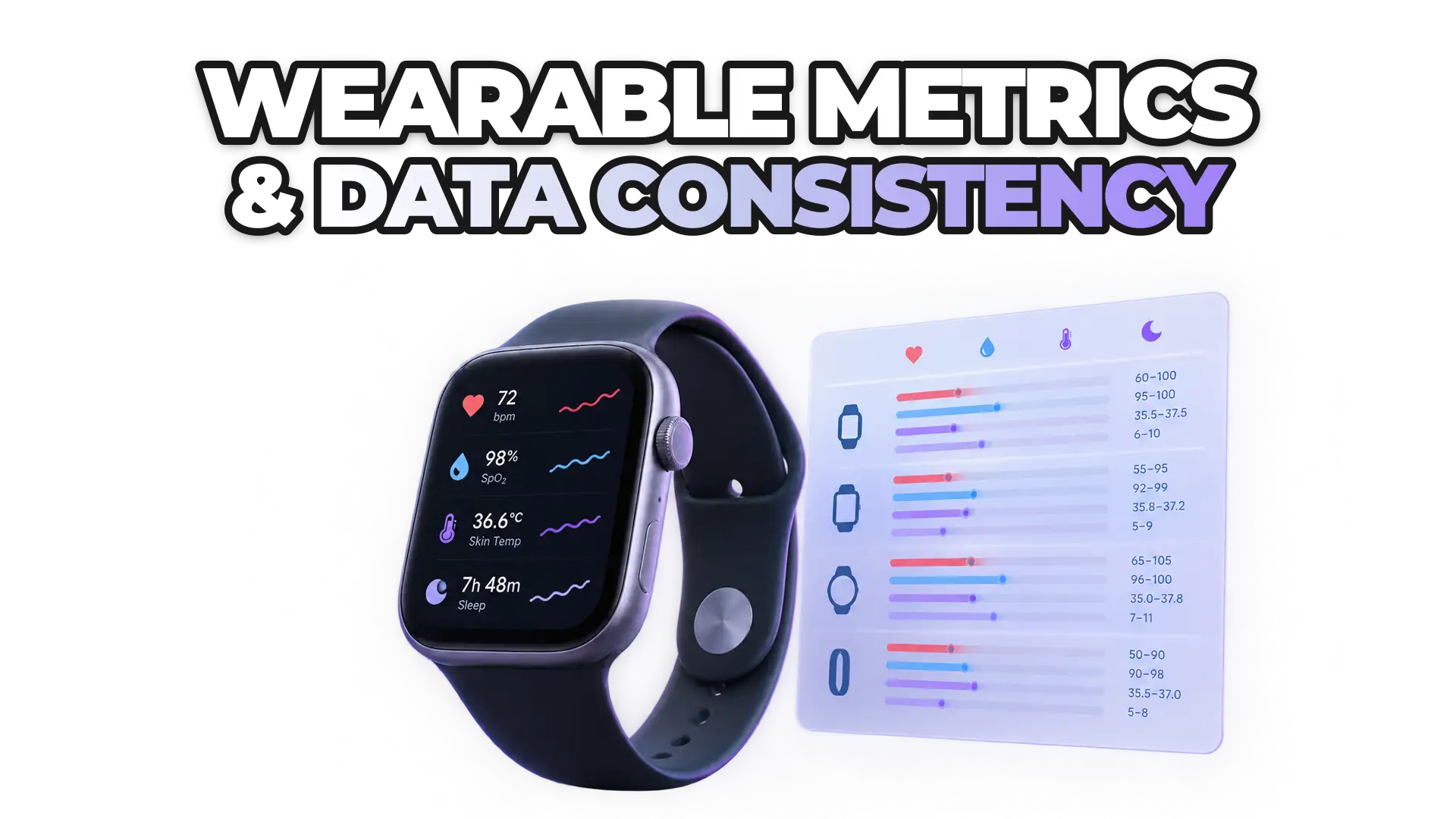
- Measure health metrics differently
- Use a different data structure
- Apply its own metric definitions
- Offer different levels of detail
- Synchronize information at different frequencies
- Require a separate authorization process
Companies can review the wearable devices and health data sources supported by ROOK to understand the variety of sources that may need to be integrated.
Differences between providers create data fragmentation. Instead of receiving one consistent view of wearable health information, companies must work with multiple APIs, schemas, permissions, and formats.
As a result, engineering teams may spend more time maintaining wearable integrations and standardizing information than building the features their users actually need. For the integration steps, see how to integrate data from multiple wearables into one system.
How does ROOK simplify wearable data integration?
ROOK simplifies wearable data integration by connecting and standardizing wearable data from multiple sources, helping companies go beyond the information displayed by an individual smartwatch.
Instead of building and maintaining a separate integration for every wearable provider, product and engineering teams can use ROOK Connect to access normalized health data through unified infrastructure.
ROOK helps teams work with health signals such as:
- Physical activity
- Sleep
- Recovery
- Body metrics
By providing a consistent data foundation, ROOK makes it easier for companies to:
- Understand how different health factors interact
- Identify meaningful changes in behavior
- Analyze health trends over time
- Build personalized health experiences
- Develop analytics, scores, and AI-powered features
- Scale products across multiple wearable ecosystems
ROOK does not transform wearable data into a medical diagnosis. It provides the standardized health data infrastructure companies need to build their own insights and user experiences.
Organizations can explore how this information applies across digital health, fitness, wellness, insurance, and research through ROOK’s wearable health data use cases.
ROOK helps companies move from fragmented wearable measurements to health data they can actually use. To see how ROOK Connect delivers that standardized data, read the ROOK developer documentation.
What is the future of wearable health data?
Smartwatches and connected health devices will continue to improve, but the most important evolution in wearable health data may not come only from better sensors or more metrics.
That evolution will come from better:
- Standardization
- Context
- Interpretation
- Personalization
- Integration across devices
The future of wearable health is not simply about tracking more information. It is about understanding that information more effectively.
What should you take away about smartwatch health data?
A smartwatch is a powerful health-tracking tool, but it does not tell you everything: it provides signals—not complete answers.
To understand wearable health data, users and companies need more than individual numbers. They need context, connections between metrics, long-term trends, and actionable insights.
Health is not only about what you measure. It is about what you understand and what you do with that information.
 Written byJuana Carolina Ordoñez MerchanInternal Digital Marketing