Blog
How Do You Integrate Wearable and Blood Test Data?
Wearables give continuous signals; blood tests give periodic lab snapshots. How combining them works, the use cases, and the technical challenges.
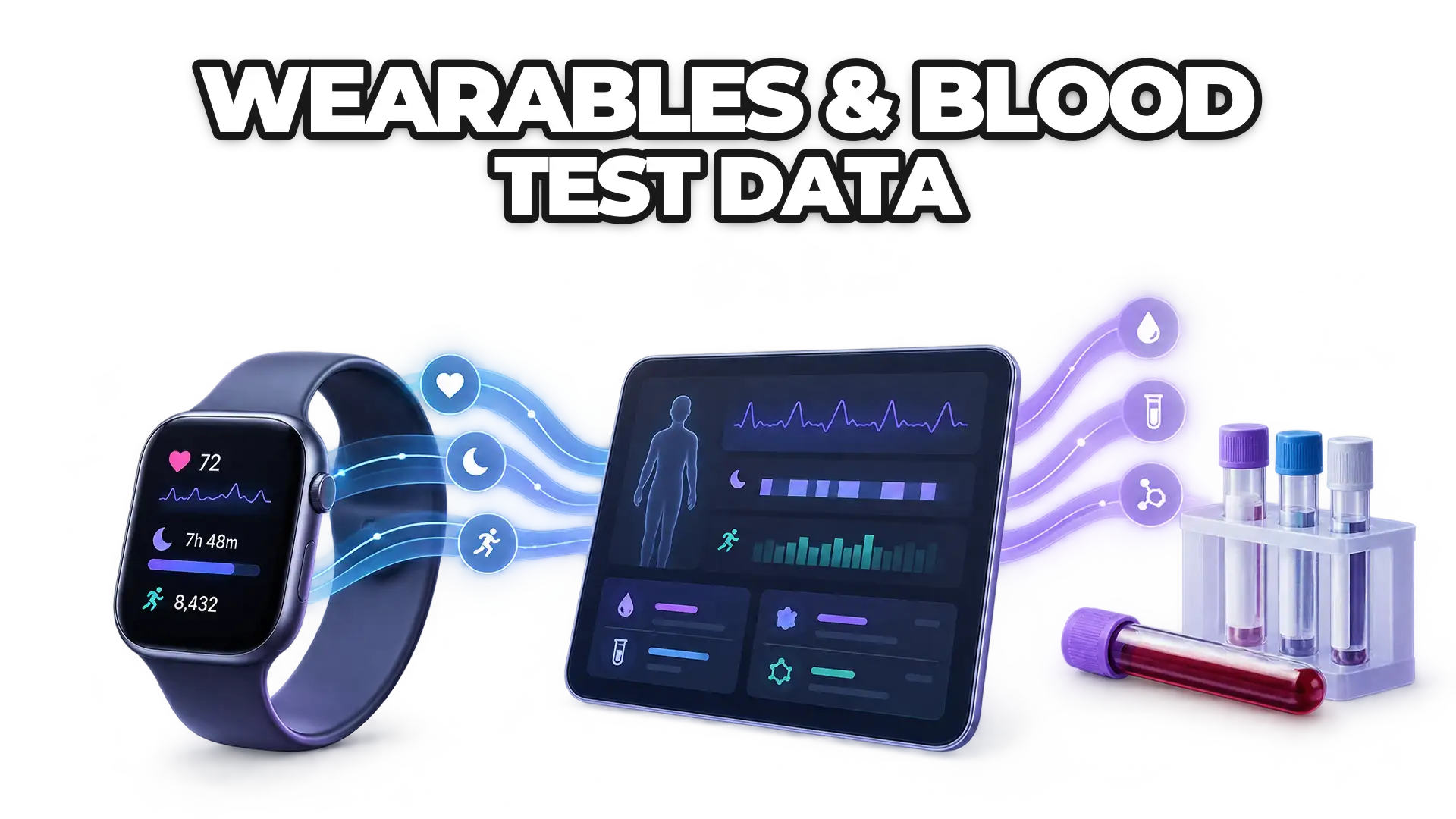
Integrating wearable and blood test data combines two complementary views of health. Wearables give continuous signals on activity, sleep, heart rate and recovery; blood tests give periodic, precise biochemical measurements such as glucose, cholesterol and hormones. Making them work together requires normalizing formats and units, aligning continuous and periodic timelines, validating data quality, and handling consent and privacy for the combined dataset.
Health data is becoming richer but also more fragmented. Individually, wearable and blood test data are valuable; combined, they support a longitudinal view of health.
What is the difference between wearable data and blood test data?
Wearable data is continuous and behavioral, while blood test data is periodic and clinical.
Wearable data (continuous signals) captures behavioral and physiological trends over time, including heart rate and heart rate variability (HRV), sleep patterns, activity levels, stress indicators and recovery metrics. This data is continuous, high-frequency and context-rich. It answers: how is the body behaving day to day?
Blood test data (clinical snapshots) provides biochemical measurements such as glucose and HbA1c, cholesterol (LDL, HDL, triglycerides), hormones, inflammatory markers and micronutrients. This data is periodic, precise and clinically validated. It answers: what is happening inside the body at a molecular level?
Why does integrating wearable and blood test data matter?
Integration matters because each dataset alone has limits: wearables provide trends but lack clinical depth, and blood tests provide accuracy but lack continuity. Combined, they give context plus precision.
For example, a wearable records an elevated resting heart rate and low HRV, and a blood test shows increased inflammation markers. Together, the two give a clinician or care team a stronger signal to review than either alone.
What are the key use cases for wearable and blood test data?
The main use cases for combined wearable and blood test data are personalized insights, preventive health programs, longevity platforms and insurance.
- Personalized health insights: platforms can correlate lifestyle behaviors with biomarkers, give more relevant recommendations and track how interventions relate to results, for example linking sleep quality to glucose regulation or activity to cholesterol trends.
- Preventive health: programs can flag deviations in wearable trends for review alongside lab results, so care teams can act sooner in areas like metabolic health, cardiovascular risk and chronic condition management.
- Longevity and optimization platforms: continuous tracking from wearables plus periodic validation from blood tests let users measure progress, test interventions (nutrition, training, supplements) and refine long-term strategies.
- Insurance and underwriting: insurers can combine both datasets for risk models, dynamic underwriting and behavior-linked incentives.
What are the technical challenges of integrating wearable and blood test data?
The main technical challenges are fragmentation, lack of standardization, temporal alignment, data quality, and privacy.
- Data fragmentation: wearables and lab providers use different APIs, data formats and update frequencies.
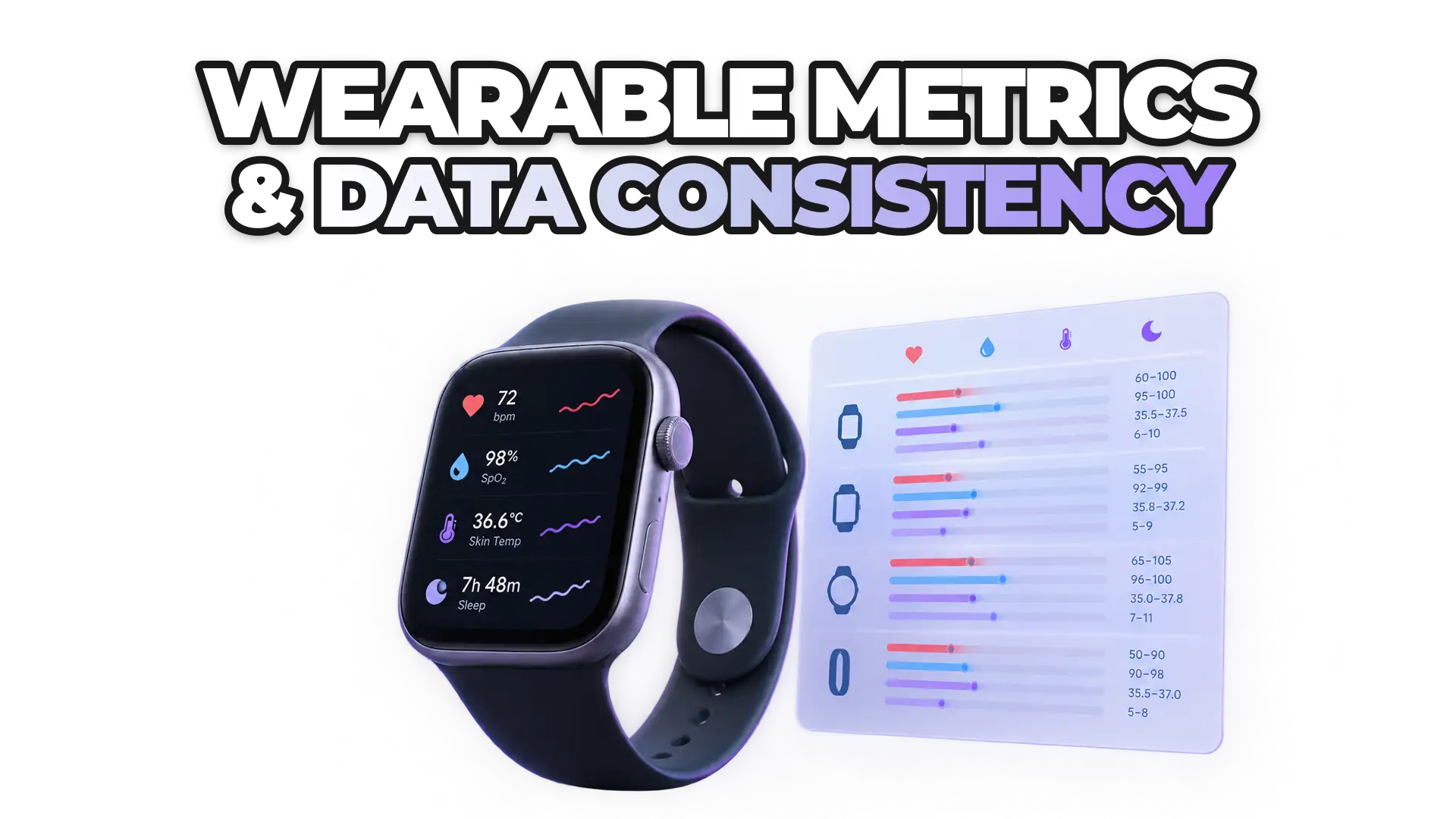
- Lack of standardization: metrics are not always directly comparable, such as wearable HRV versus clinical measurements, or different units and reference ranges across labs. Normalization is required.
- Temporal alignment: wearable data is continuous while blood tests are periodic, so systems must align timelines, find meaningful correlations and avoid false interpretations.
- Data quality and reliability: wearable accuracy varies by device, and lab results depend on timing and conditions, so combining them requires careful validation.
- Privacy and compliance: combined datasets are more sensitive and need secure handling, user consent management and compliance with regulations such as HIPAA and GDPR.
What data infrastructure does wearable and blood test integration need?
Scalable integration needs unified APIs for wearable data, structured ingestion of lab results, normalization layers, and analytics and interpretation models.
ROOK is a health data aggregation and intelligence platform that connects and standardizes data from wearables, labs and other sources, with 72 data sources and more than 500 devices, so developers can build health experiences instead of managing device connections. ROOK operates under a HIPAA-aligned security program, signs BAAs with covered entities, and processes EU personal data under GDPR as a data processor.
How does integrated data support decision-making?
The value of integrated wearable and blood test data lies in what it enables. Effective systems combine signals into clear indicators, highlight meaningful changes, provide actionable recommendations and adapt over time.
An example message a product might show: “Your recovery is decreasing and inflammation markers are elevated — consider reducing training load and improving sleep consistency.”
Interpreting combined results remains the job of the product's clinical logic and of health professionals. ROOK moves and standardizes the data; it does not diagnose or replace clinical judgment.
What will multi-layer health data platforms combine?
Multi-layer health data platforms will combine wearable data, lab results, medical records and lifestyle inputs, creating a health data stack that supports personalized medicine, preventive care and continuous health optimization.
Why are wearables and blood tests stronger together?
Wearables and blood tests are two complementary views of health: one continuous and behavioral, the other precise and clinical. As integration improves, products move from tracking data to understanding health and guiding decisions.
The companies that succeed will connect, standardize and translate these data sources into meaningful, actionable insights. For related reading, see how to integrate data from multiple wearables into one system and why health data quality matters, or start with the ROOK developer documentation.
 Written byDaniel MasDigital Marketing Lead