Blog
Top Challenges in Wearable Data Integration and How to Solve Them
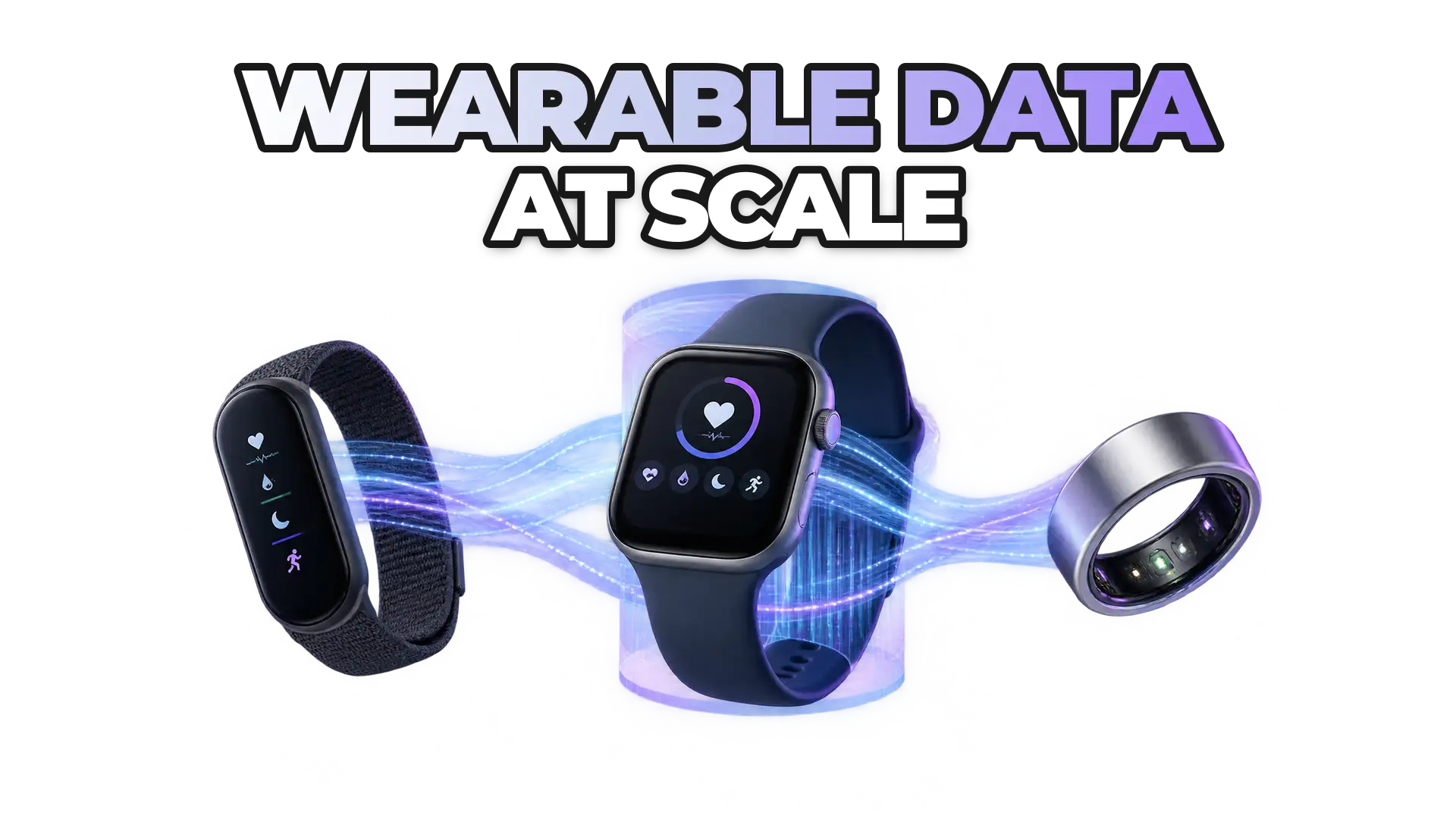
Integrating wearable data into a product may seem straightforward at first. Most manufacturers provide APIs, documentation, and developer access.
Integrating wearable data into a product may seem straightforward at first. Most manufacturers provide APIs, documentation, and developer access. However, as soon as a platform needs to support multiple devices and scale across users, complexity increases — which is why we have written before about the real challenges of working with wearable data and the hidden costs of fragmented wearable data.
These are not niche engineering complaints. In its August 2026 report on wearable technologies in clinical decision-making, the U.S. Government Accountability Office named device-to-device variation in accuracy, and the difficulty of receiving, responding to, and protecting wearable data inside existing systems, as two of the main barriers to adoption — and recommended establishing common practices for handling that data.
In this article, we break down the most common challenges in wearable data integration and outline practical approaches to solving them.
1. Managing multiple device integrations
The challenge
Each wearable manufacturer operates independently, with its own:
API structure
Authentication flow
Data schema
Versioning lifecycle
Rate limits
If your product supports five manufacturers, you are effectively maintaining five independent integrations. With 400+ wearables and health data sources available, and each one behaving differently, that number rarely stays at five — our guide to the particularities of each wearable health data source shows how much actually changes between providers.
Over time, this leads to:
Increased engineering overhead
Fragmented backend logic
Higher maintenance costs
This is the scenario we describe in the problem with direct integrations.
The solution
To reduce complexity:
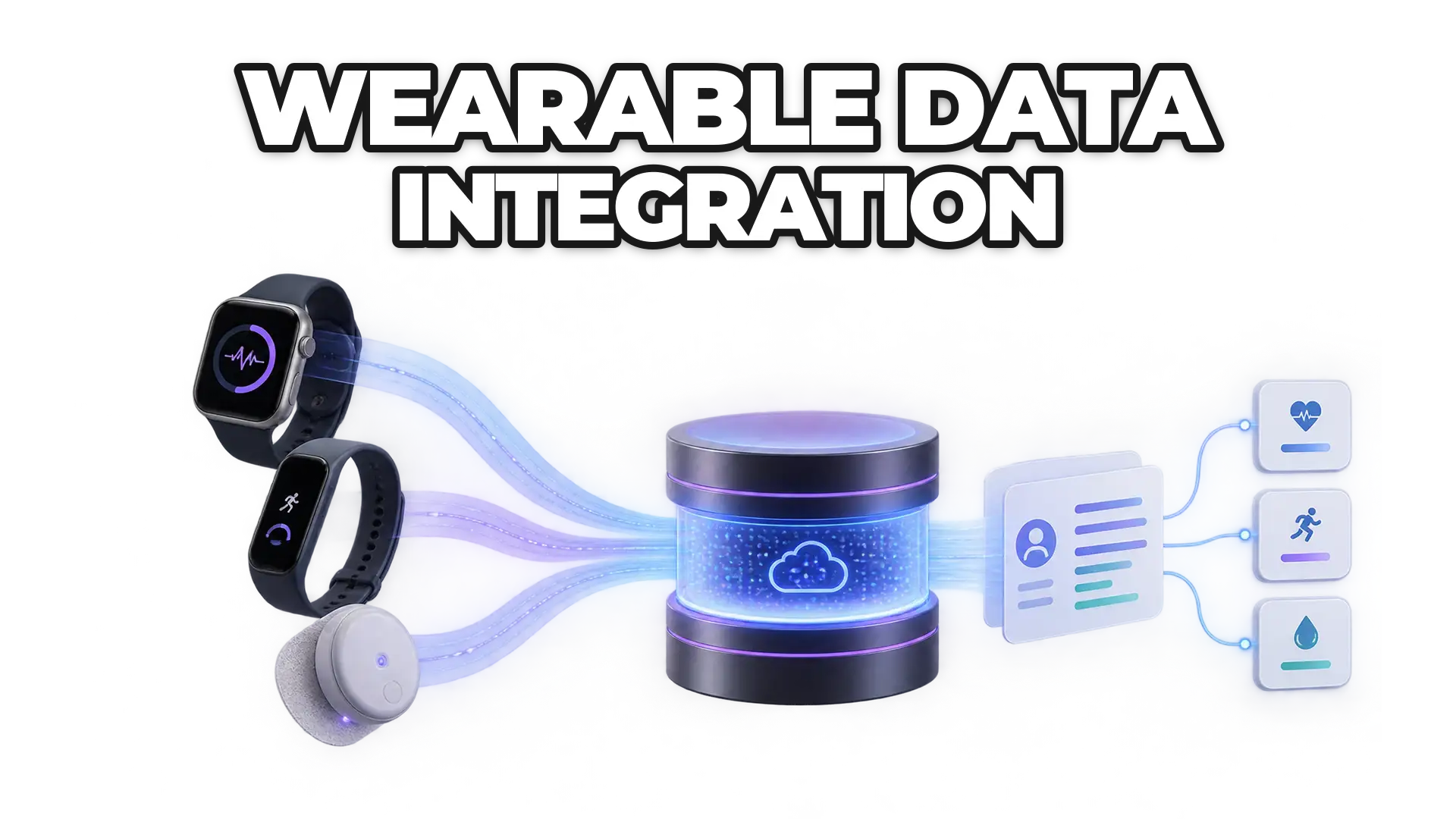
Centralize integration through a unified API layer.
Abstract manufacturer-specific logic from your core system.
Maintain a normalized internal schema.
A single integration point simplifies long-term scalability and reduces operational risk — the reasoning behind integrating hundreds of wearables through a single API, and the architecture described in the ROOKConnect documentation. The practical steps are covered in how to integrate data from multiple wearables into one system.
2. Inconsistent metric definitions
The challenge
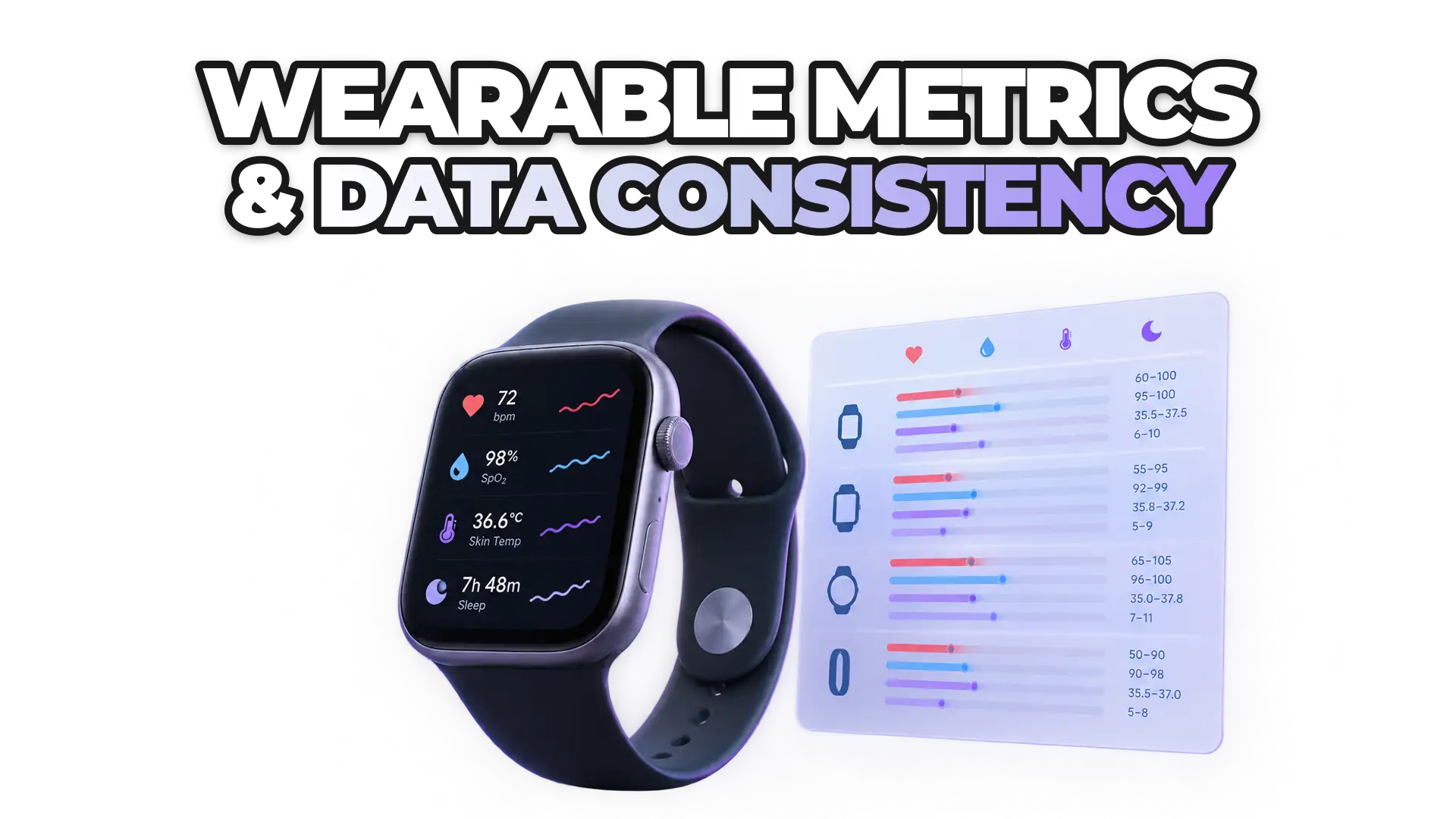
Not all devices calculate metrics in the same way.
Examples:
HRV may use different time-domain or frequency-domain methods.
Sleep stages are classified using proprietary algorithms.
Active minutes may require different intensity thresholds.
Each of these has a documented basis. The reference definitions for HRV come from Shaffer and Ginsberg's overview of HRV metrics and norms, where RMSSD, SDNN, and LF/HF are explicitly not interchangeable. For sleep, a comparison of seven consumer sleep-tracking devices against polysomnography found that devices agree reasonably on total sleep time but diverge on stage classification. And "active minutes" usually traces back to the moderate-to-vigorous thresholds in the WHO physical activity guidelines, implemented differently by each manufacturer. Our guide to wearable data types: activity, sleep, HRV, temperature, and more and our article on how HRV is tracked and improved go deeper on both.
Without alignment, combining data across devices can distort analytics and product logic.
The solution
Define standardized metric definitions at the platform level.
Map manufacturer metrics into a unified data model.
Avoid relying exclusively on proprietary composite scores when cross-device comparability is required.
The method is described in how to standardize health data from devices. When you do need a composite score, compute it from normalized inputs instead of inheriting a vendor's: ROOK Score 2.0 applies the same definitions to every device, and our article on ROOK's health score explains how it is built.
Consistency is more important than raw metric availability.
3. Data quality and missing values
The challenge
Wearable data is not always continuous or complete.
Common issues include:
Users not wearing the device
Delayed synchronization
Partial historical access
Device switching
These gaps can affect:
Predictive models
Engagement analytics
Risk scoring
This is the practical face of why wearable data is messy, and the reason health data quality has to be handled at ingestion rather than in the analytics layer.
The solution
Implement validation rules at ingestion.
Flag incomplete or low-confidence records.
Design models that tolerate missing data.
Track device changes at the user level.
Deduplication belongs in that list too, as we explain in data integrity and handling duplicate records. Building resilience into your data pipeline improves reliability, and it is the precondition for AI-ready wearable data.
4. API versioning and maintenance
The challenge
Manufacturers update APIs regularly. Changes may include:
New endpoints
Deprecated endpoints
Modified response formats
Updated authentication requirements
Each change requires engineering time for review and testing. A 2026 tutorial in Clinical and Translational Science on device and data access considerations for digital health studies documents how much of a study's engineering effort goes into keeping these access paths working.
This is not hypothetical. Google's own migration guidance states that the Google Fit APIs, including the REST API, are supported only until the end of 2026, and that teams must move to Health Connect, Health Services, or the Google Health API — the next generation of the Fitbit Web API, depending on how they read data today. Any product that integrated those endpoints directly has a hard deadline attached to code it did not write.
When integrating multiple APIs, maintenance grows linearly with each new device.
The solution
Monitor API changelogs proactively.
Use version-controlled internal schemas.
Implement automated testing for ingestion pipelines.
Consider consolidating integrations through a unified API provider.
Reducing direct dependencies lowers maintenance exposure — the cost side of that trade-off is quantified in our case study on savings versus in-house wearable integrations.
5. Scalability and infrastructure
The challenge
As your user base grows, so does:
The number of API requests
Data storage requirements
Processing complexity
Monitoring needs
Wearable data is longitudinal and accumulates over time, especially when devices are used as continuous health monitoring systems. Infrastructure must support continuous ingestion and historical analysis.
The solution
Use asynchronous processing pipelines.
Implement rate limit management and retry logic.
Separate ingestion from analytics layers.
Optimize storage for time-series data.
Rate limits are signalled with HTTP 429 Too Many Requests and a Retry-After header; a backfill job that ignores them will silently lose history. Storage strategy depends on your schema, which is why it helps to settle on one early — ours is described in the biomarker data structure guide.
Designing for scale early prevents architectural bottlenecks later.
6. OAuth and token lifecycle management
The challenge
Wearable APIs rely on OAuth 2.0. This introduces:
Access token expiration
Refresh token management
Scope handling
User reauthorization flows
Improper token management can result in silent data gaps — the failure mode behind most "the integration stopped working and nobody noticed" incidents, as we cover in how to access health data from wearables.
The solution
Implement automated token refresh logic.
Log and monitor token expiration events.
Notify users when reauthorization is required.
Securely store tokens according to best practices.
The IETF's Best Current Practice for OAuth 2.0 Security (RFC 9700) defines what those best practices are, including PKCE and strict redirect URI matching. If you want the authorization and binding flow handled for you while you validate the product, the ROOK Extraction App manages user binding and source authorization end to end.
Token lifecycle management is foundational to stable integration.
7. Cross-device comparability
The challenge
Users may:
Own multiple devices
Switch brands over time
Use different wearables for different purposes
Even the two main phone platforms disagree: Apple Health and Health Connect store and count activity differently. Without normalization, longitudinal tracking becomes inconsistent.
The solution
Maintain a device-agnostic data model.
Normalize units and time zones.
Document metric definitions clearly.
Apply transformation rules consistently across all data sources.
Timestamps are where this usually breaks: normalize to RFC 3339 date and time formats and resolve offsets against the IANA Time Zone Database, or a "daily" summary will land on the wrong day for a traveling user. If the data will ever reach a clinical system, map it to the HL7 FHIR Observation resource as well — see the FHIR protocol and the opportunity for wearable data and our biomarker data structure guide.
Comparability ensures continuity in analytics and user experience.
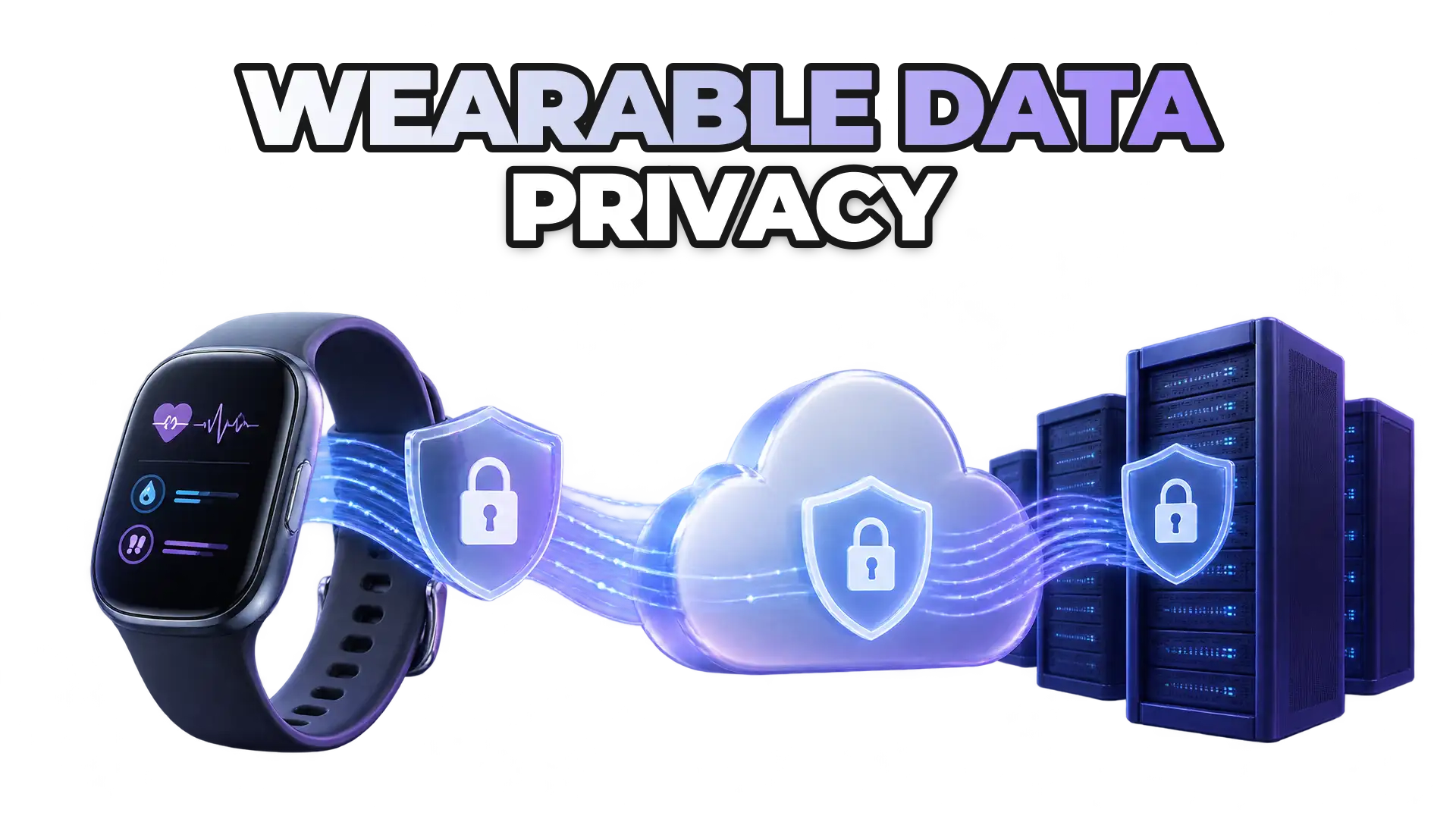
8. Privacy and regulatory requirements
The challenge
Wearable data often includes health-related information. Organizations must manage:
User consent
Data minimization
Secure storage
Regional compliance requirements
The applicable frameworks depend on where you operate and what you do with the data: the HIPAA Privacy Rule in US healthcare contexts, the General Data Protection Regulation (EU) 2016/679 in Europe, and the FTC's Health Breach Notification Rule, which the agency has confirmed applies to health apps and connected device companies outside traditional healthcare.
The European picture is also moving. Regulation (EU) 2025/327, establishing the European Health Data Space, is now in force and phasing in across the EU, setting rules for how electronic health data is shared, ported, and reused — including requirements that reach wellness applications feeding data into that ecosystem. Architecture decisions you make today about consent, provenance, and data models will determine how much rework those rules cost you later.
Failure to align with regulatory frameworks introduces legal and reputational risk.
The solution
Implement explicit consent flows.
Store only necessary data.
Encrypt data in transit and at rest.
Align internal policies with applicable regulations.
Security design belongs here too: the OWASP API Security Top 10 lists broken object-level authorization as the most common API failure, and a health data integration is exactly that kind of surface. These requirements get stricter as the data moves toward care delivery, whether that means wearables in clinical trials or integrating wearables into clinical workflows.
Privacy considerations must be integrated into architecture design from the beginning.
9. Build vs. buy decision
The challenge
Some teams choose to integrate manufacturers directly. While this may work initially, complexity increases as:
More devices are added
Data volume grows
Maintenance cycles accumulate
Engineering teams can become focused on sustaining integrations rather than building product features. We break the decision down in wearable integrations: build in-house or use an API, and compare the platform-kit route in health kits vs. an API for health data integration.
The solution
Evaluate:
Long-term maintenance cost
Engineering bandwidth
Speed to market
Risk exposure
A unified wearable data API can reduce integration overhead and allow teams to focus on delivering value. If you are at the vendor evaluation stage, start with the best wearable APIs for developers, the top wearable APIs to consider in 2026, and the best wearables API for startups, plus our head-to-head comparisons with Terra, Spike, and Validic.
How we approach these challenges at ROOK
At ROOK, we centralize wearable integrations through a single, unified API.
Our approach includes:
Aggregating multiple manufacturers
Normalizing metric definitions
Managing OAuth flows
Handling API updates
Delivering structured, usable data
By abstracting manufacturer-specific complexity, we help teams reduce operational load and improve scalability — the shift from maintaining connections to using a health API to build smarter apps. You can see what that looks like in production across use cases and industries, including how PEAR Health Labs powers smart training with ROOK and how Physmodo transformed movement analysis.
We also talk through these trade-offs in the open: our podcast and media hub covers secure health data integrations and how ROOK unifies scattered data from 300+ wearables, earlier episodes explore building a universal language for health tech, and our partner conversations show how insurers and digital health companies handle these same challenges in production.
Final thoughts
Wearable data integration is not only a technical task. It is an architectural decision that affects scalability, analytics quality, compliance, and long-term product strategy.
The key challenges include:
Fragmentation
Inconsistent definitions
Maintenance overhead
Data quality gaps
Scalability constraints
Addressing these challenges early enables organizations to build reliable, data-driven products that scale over time. The payoff is measurable: wearable integrations increase product retention when the data behind them is consistent, and the gap will only widen as wearable data evolves through 2026 and beyond.
If you are planning to integrate wearable data, designing for normalization and centralization from the start will reduce complexity and improve long-term outcomes. Two good next steps: understand how wearable APIs work end to end, and decide early whether your mobile sources need an SDK rather than an API, as we explain in SDK vs API in health tech and wearable SDKs for healthcare app development.
 Written byJuana Carolina Ordoñez MerchanInternal Digital Marketing