Blog
How Do Wearables Help Women Track Health and Make Informed Decisions?
Wearables help women track menstrual cycles, sleep, stress, heart rate and activity, see patterns and share them with healthcare providers. Benefits and limits.
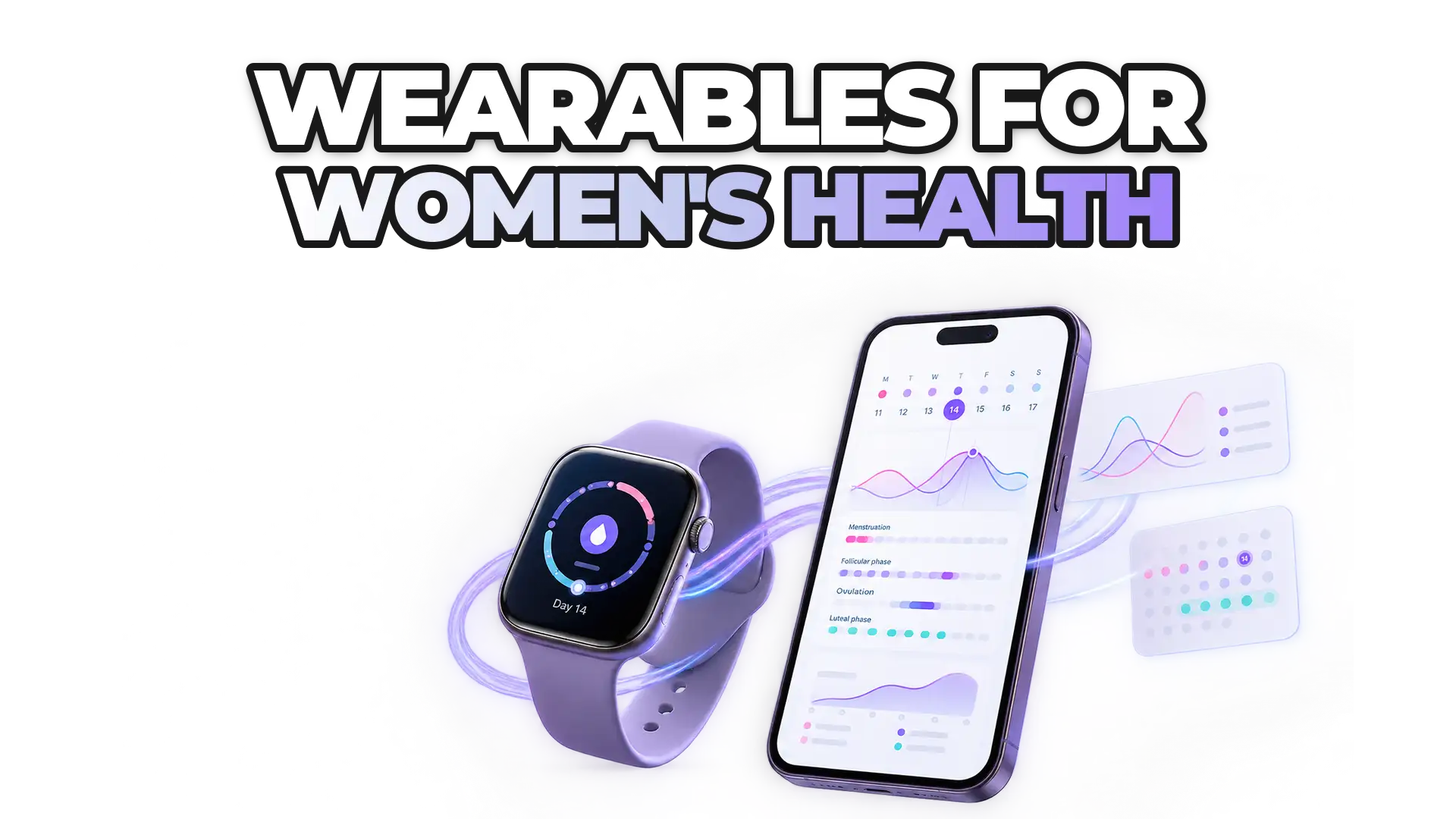
Wearables help women track menstrual cycles, sleep, stress, heart rate, activity and blood oxygen over time, which makes personal patterns easier to see and to share with healthcare providers. That data supports informed lifestyle decisions and better-prepared medical conversations. Wearables have limits: not all devices are medically certified, health data needs protection, and many devices were designed with male-biased datasets.
Wearable technology has changed how people track their health, from steps and heart rate to sleep and stress levels. For women in particular, these devices make it easier to understand health in ways that were previously difficult.
How do wearables support women's health beyond the basics?
Wearables let women track variables that traditional healthcare often overlooks, from menstrual cycles and hormonal changes to pregnancy and menopause, and share those insights with healthcare providers or use them for personal health management.
Key benefits of wearables for women's health include:
- Cycle tracking and hormonal health: smart wearables can track menstrual cycles, ovulation and fertility windows, helping women understand their bodies and make informed decisions.
- Heart and metabolic health: wearables can measure heart rate, activity and blood oxygen levels, and changes in these signals can be a reason to talk with a healthcare provider.
- Sleep and stress management: sleep quality and stress levels are important indicators of overall health, and wearable data helps women adjust habits to improve rest and reduce chronic stress.
How does personal health data empower women?
Access to personal health data lets women take ownership of their wellbeing. Wearables provide context, not just numbers, so women can identify patterns, make lifestyle adjustments and engage more actively with healthcare providers.
For example, tracking symptoms alongside cycle data gives a healthcare provider useful context when evaluating possible hormonal conditions such as PCOS. Tracking sleep and activity can support habits linked to mental wellbeing and burnout prevention, particularly for women balancing work, family and personal care. For more on cycles, see how wearables are changing menstrual cycle tracking and educational resources for menstrual health tracking.
What are the limits of wearables for women's health?
Wearables for women's health have three main limits:
- Accuracy of data: not all wearables are medically certified, and wearable data should complement, not replace, professional medical advice.
- Privacy and security: health data is sensitive, and users must make sure their information is protected.
- Inclusivity: many devices were initially designed with male-biased datasets, and wearable technology needs to evolve to reflect diverse female health needs.
What is the future of wearables in women's health?
Wearables are becoming a tool for personalized health management and preventive care, not just fitness. As the technology advances, women will have more ways to understand their bodies, advocate for their health and make data-driven decisions that improve quality of life.
For companies building women's health products, ROOK connects and standardizes data from 72 data sources and more than 500 devices. ROOK moves and standardizes the data; it does not diagnose or replace clinical judgment. To explore the available data, start with the ROOK developer documentation.
 Written byDaniel MasDigital Marketing Lead