Blog
What Are the Data Quirks of Each Wearable Health Data Source?
ROOK’s open Notion library documents how Garmin, Apple Watch, Fitbit, Oura, WHOOP, Dexcom and other sources deliver and treat health data.
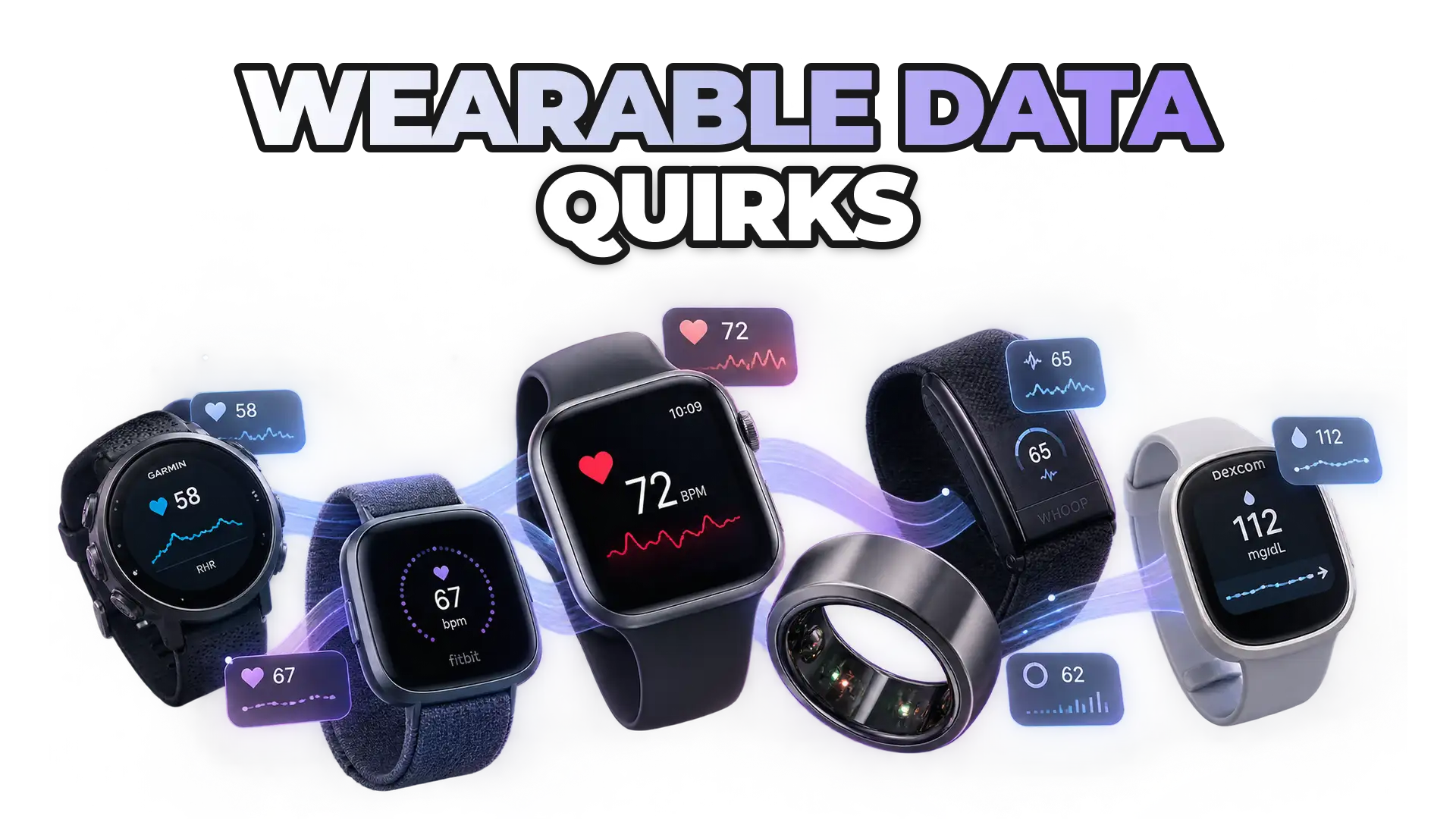
Each wearable brand delivers and treats health data in its own way, so the same metric can behave differently from Garmin, Apple Watch, Fitbit, Oura, WHOOP or Dexcom. ROOK documents these source-specific behaviors in a continuously updated, open Notion library built from years of working with each brand’s APIs and SDKs, so anyone can check a data source’s particularities before relying on its data.
ROOK has worked with a wide range of wearable APIs and SDKs for many years. The goal of the library is to share that knowledge openly with anyone who wants to understand the data sources ROOK integrates with.
ROOK harmonizes, standardizes, normalizes and cleans data from these sources, but each wearable brand still has its own way of delivering and treating data. Understanding those particularities is necessary to use wearable health data well. For why those differences exist, see why wearable data is messy.
Open ROOK’s Notion library of data source learnings to see the notes for each source.
To see how ROOK delivers that data once it is normalized, read the ROOK developer documentation.
 Written byJonas DückerCMO | COO