
Why Most Remote Monitoring Setups Don't Scale
Remote patient monitoring (RPM) has become a cornerstone of modern healthcare. From chronic disease management to post-discharge care and preventive health programs, organizations are investing in connected devices and digital health platforms to collect continuous patient data. The reimbursement landscape reflects this shift too, with CPT codes increasingly favoring remote patient monitoring and preventive care.
The promise is compelling: better patient engagement, earlier interventions, and improved clinical outcomes.
Yet many remote monitoring initiatives struggle to scale. The problem usually isn't the monitoring devices themselves — it's the infrastructure behind the data. As organizations expand beyond a pilot program, they quickly run into fragmented health data, inconsistent metrics, and growing engineering complexity that slows product development and limits clinical impact.
The hidden complexity behind remote monitoring
Launching a remote monitoring program often starts small. A healthcare organization might initially support:
A blood pressure monitor
A continuous glucose monitor (CGM)
A wearable device
A health app
At first, integrating these sources appears manageable. As programs grow, however, patients begin using different brands and platforms, including:
Apple Health
Health Connect
Fitbit
Garmin
Oura
WHOOP
Dexcom
Abbott
Withings
Polar
Connected medical devices
Laboratory providers
Electronic Health Records (EHRs)
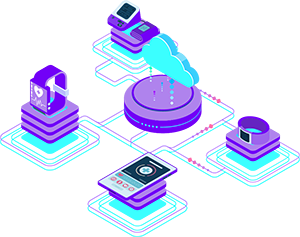
Each source introduces its own authentication process, API structure, historical data availability, update frequency, data model, units of measurement, permission model, and quality standards. Instead of managing one health data ecosystem, engineering teams suddenly find themselves maintaining dozens — a challenge we break down in more detail in How do I integrate data from multiple wearables into one system?
This challenge becomes even greater for organizations building outcome-driven programs such as those following the ACCESS model, where reliable, standardized data is essential for measuring clinical outcomes.
Related reading: How to Track Outcomes for ACCESS: BP, HbA1c, Activity, and More
Fragmented data creates fragmented care
Remote monitoring depends on consistency. Unfortunately, health data rarely arrives in a consistent format.
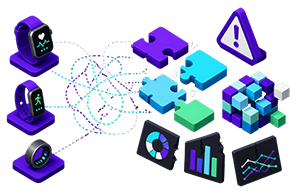
Two wearables may report the same biomarker differently. Heart rate variability may use different calculation methods. Sleep stages may follow different definitions. Blood pressure devices may report measurements using different metadata. Glucose readings may arrive at different intervals depending on the CGM manufacturer.
Without standardization, clinical teams face difficult questions:
Can these measurements be compared?
Is this change clinically meaningful?
Did the patient improve, or did the device simply report data differently?
When healthcare organizations cannot confidently answer these questions, remote monitoring loses much of its clinical value. This is one of the most common and most underestimated pain points in digital health infrastructure. We explore it further in Why Wearable Data Is Messy and How to Normalize It and The Hidden Costs of Fragmented Wearable Data and How AI Solves It.
Data quality matters more than data volume
Collecting more data doesn't automatically improve patient care. Poor-quality data often creates additional noise rather than better insights.
Healthcare organizations need data that is complete, consistent, standardized, traceable, and reliable. Engineering teams frequently spend significant time solving issues such as:
Missing historical data
Duplicate records
Time zone inconsistencies
Different units of measurement
API outages
Vendor-specific edge cases
Every hour spent cleaning data is an hour not spent improving patient experiences or developing new clinical capabilities. Duplicate records in particular can quietly distort clinical results — see Data Integrity in Wearable APIs: The Importance of Handling Duplicate Data for a closer look at why this matters. For a broader view of what "good" data actually looks like in a clinical context, read Why Health Data Quality Matters.
The scaling problem with point-to-point integrations
Many organizations build their remote monitoring platform one integration at a time. The architecture often looks like this:
Device A → Platform Device B → Platform Device C → Platform Device D → Platform
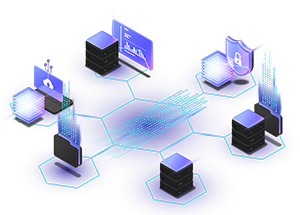
Initially, this works well. But as new devices, laboratories, and health platforms are added, maintenance grows exponentially. Each additional integration requires new authentication logic, API monitoring, vendor-specific testing, maintenance during API updates, and independent quality assurance.
Over time, engineering resources shift away from innovation and toward maintenance — the same pattern described in The Problem with Direct Integrations: Chaos, Maintenance, and Lack of Scalability.
Related reading: How to Integrate Wearables into Clinical Workflows (Without Breaking Your Stack)
Why standardization is the foundation of scalable remote monitoring
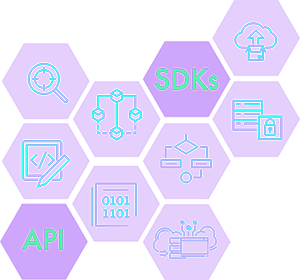
Successful remote monitoring programs are built on standardized health data, not simply connected devices. A standardized infrastructure allows organizations to:
Normalize health metrics across data sources
Standardize historical data
Handle authentication consistently
Maintain traceability
Improve interoperability with clinical systems
Support future device integrations without redesigning the platform
Instead of asking engineering teams to solve the same problems repeatedly, organizations create a reusable foundation for every future integration. We cover the practical side of this in How to Standardize Health Data from Devices, and explain why it's non-negotiable for outcome-based care in Why the ACCESS Model Needs Standardized Wearable Data.
This becomes increasingly important as programs expand into chronic disease management, preventive care, remote patient monitoring, digital therapeutics, clinical research, and value-based care.
Clinical interoperability requires more than APIs
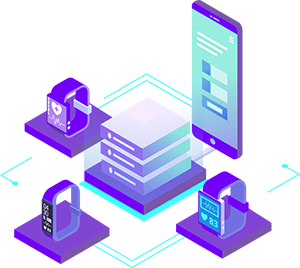
Scaling remote monitoring also means preparing data for clinical use. Healthcare organizations increasingly require compatibility with standards such as FHIR R4, LOINC, and UCUM.
These standards make health information easier to exchange across Electronic Health Records (EHRs), analytics platforms, and clinical applications. Simply connecting devices is no longer enough — healthcare data must also be interoperable. For a deeper look at why this standard matters for wearable data specifically, see FHIR Protocol and its Purpose: The Opportunity for Wearable Data. And since much of this data ultimately needs to reach clinical systems, it's worth understanding why EHRs should integrate wearables in the first place.
Related reading: ACCESS Model: From Data Collection to Measurable Outcomes
Designing remote monitoring programs that grow
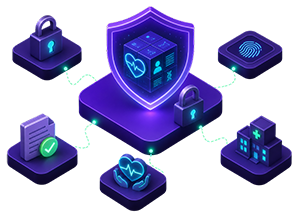
Many remote monitoring platforms are optimized for today's devices. Few are designed for tomorrow's ecosystem. Healthcare organizations should ask:
How easily can we add new wearable providers?
Can we integrate laboratory results?
Can we support new medical devices?
Will our architecture scale as patient populations grow?
Can we compare outcomes consistently across every data source?
Answering these questions early prevents expensive architectural redesigns later. For organizations already building toward ACCESS milestones, What ACCESS Model Companies Need to Build Before Go-Live walks through the infrastructure, onboarding flows, and monitoring systems that need to be in place first.
Scalable remote monitoring isn't about supporting more devices. It's about supporting more reliable health data.
How ROOK simplifies remote monitoring
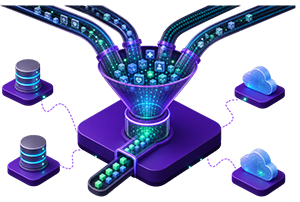
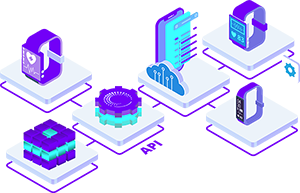
ROOK provides a standardized health data infrastructure that helps organizations integrate wearable devices, medical devices, laboratory data, and health platforms through a single integration.
With ROOK Connect, engineering teams can access standardized health data without managing multiple APIs, reducing the complexity of maintaining dozens of vendor-specific integrations — the same efficiency gain we outline in Why Integrate Hundreds of Wearables Through a Single API?
This lets organizations focus on what matters most: building better patient experiences, improving clinical workflows, measuring outcomes, and accelerating product development. Instead of spending engineering resources maintaining fragmented integrations, teams can build scalable remote monitoring solutions on top of consistent, reliable health data.
The future of remote monitoring depends on better data
Remote monitoring is no longer limited by connected devices. It's limited by fragmented infrastructure.
Organizations that successfully scale remote monitoring won't necessarily be those collecting the most data. They'll be the ones capable of transforming fragmented health information into standardized, interoperable, and clinically meaningful insights.
As remote monitoring continues to expand across healthcare, choosing the right health data infrastructure today can reduce engineering complexity, improve data quality, and prepare your platform for long-term growth.
Ready to simplify remote monitoring?
Discover how ROOK Connect helps healthcare organizations unify health data from hundreds of wearables, medical devices, laboratory providers, and health platforms through a single integration.
Learn more: ROOK Connect